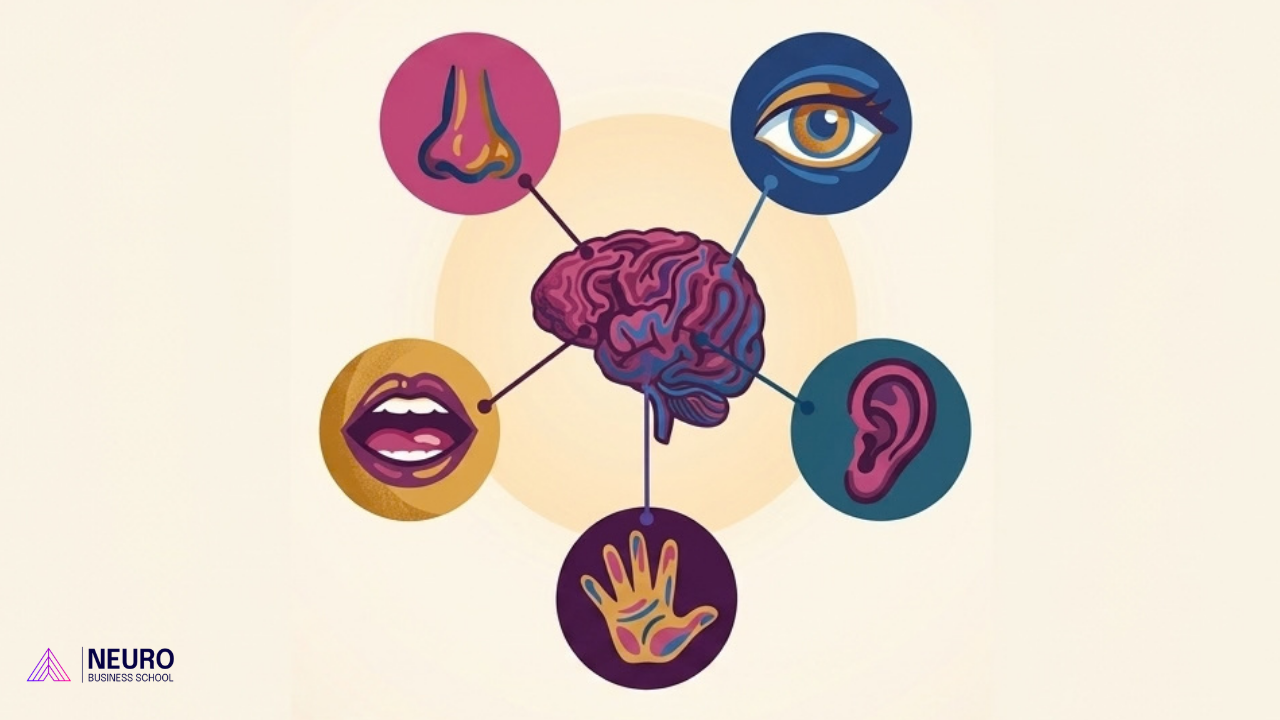


Two new books sit side by side on the front shelf. Same price, both by authors you’ve never heard of. You pick one up, then the other, and within seconds you know which one is coming home with you. You haven’t read a single page of either.
Everyone says don’t judge a book by its cover. That’s exactly what your brain does, and not only with books. It does the same with faces, profile photos, homepages and price tags, usually before you’ve had time to think about it. Psychology and marketing research has measured how fast this happens, and how much it shapes what people choose to buy.
What this article covers:
⚡ How quickly your brain reads trust from a face, and why that changes what people pay
📚 What research says about choosing a book by its cover
💻 How long a website has to make a first impression
🍷 How a price tag can change how a wine tastes
🎯 Whether first impressions are actually right, and why marketers care either way
Why Does a Face Decide What You’re Willing to Pay?

Image by rawpixel.com on Magnific
Because your brain forms an impression of trust from a face in about a tenth of a second, and that impression carries straight into decisions about money.
Psychologists Janine Willis and Alexander Todorov at Princeton showed people photos of unfamiliar faces for 100, 500 or 1,000 milliseconds and asked quick questions: is this person trustworthy, competent, likeable? The judgments made after just 100 milliseconds matched closely with judgments that other people made with no time limit at all. Trustworthiness was the trait people read most consistently.
Giving people more time didn’t make their judgments line up any better. Mostly, it made them more confident. In the psychology of judgment, that’s a telling detail: the extra time wasn’t used to rethink the first impression, but to feel surer of it.
The same reflex shows up when money is involved. A team at the Hebrew University of Jerusalem studied how guests choose where to stay on Airbnb. Hosts whose profile photos looked more trustworthy charged higher prices and were more likely to be booked. Review scores, on the other hand, had no effect in the real listings, because nearly all hosts had top scores. When the researchers varied the review scores in a separate experiment, those scores did affect choices, yet the host’s photo still played a role. The face was doing work the reviews couldn’t.
Do People Really Choose a Book by Its Cover?

Partly, yes. Real readers let the cover do part of the choosing, and in a controlled test an attractive cover raised interest in a book more than the author’s name did.
Researchers at Vilnius University set up a fake online bookshop inside a real bookstore and a public library. 180 visitors each picked one book from a shelf of 18 covers. Every book cost the same, and all they could see was the cover, title and author. An eye tracker recorded where they looked.
In this exploratory study, covers where orange was the main color were clear favorites for both men and women, while yellow, green, black and white covers were chosen least. Before the experiment, the design team at Lithuania’s largest publisher had told the researchers that most customers prefer warm colors. The data didn’t clearly support that, a useful reminder that even experienced professionals don’t always know what their customers respond to. Afterwards, a quarter of participants said a nice cover was the main reason for their choice. Even more pointed to an attractive title, which is part of the cover too.
A study at HEC Montréal went a step further. 120 people near a business school bookshop rated eight upcoming books, a mix of novels and management books. The researchers changed the author’s fame, the publisher’s reputation, and whether the cover was attractive or not. The attractiveness of the cover had the strongest effect on interest, stronger than a famous author or a well-known publisher. Whether the cover actually matched the content of the book made no difference at all.
The authors also noted something every marketer should keep in mind: people may not admit that a nice-looking cover sways them, because it feels irrational. So when customers say they choose on content alone, their behavior can tell a different story. That gap shapes a lot of consumer buying decisions, and it’s one reason researchers watch what people do, not only what they say.
Covers also send signals. In a study published in Scientific Study of Literature, science-fiction fans and mystery fans sorted book covers into groups, and the way they sorted them depended on how well they knew the genre. For the right audience, a cover works like a code that says what kind of story is inside.
How Quickly Do You Judge a Website?
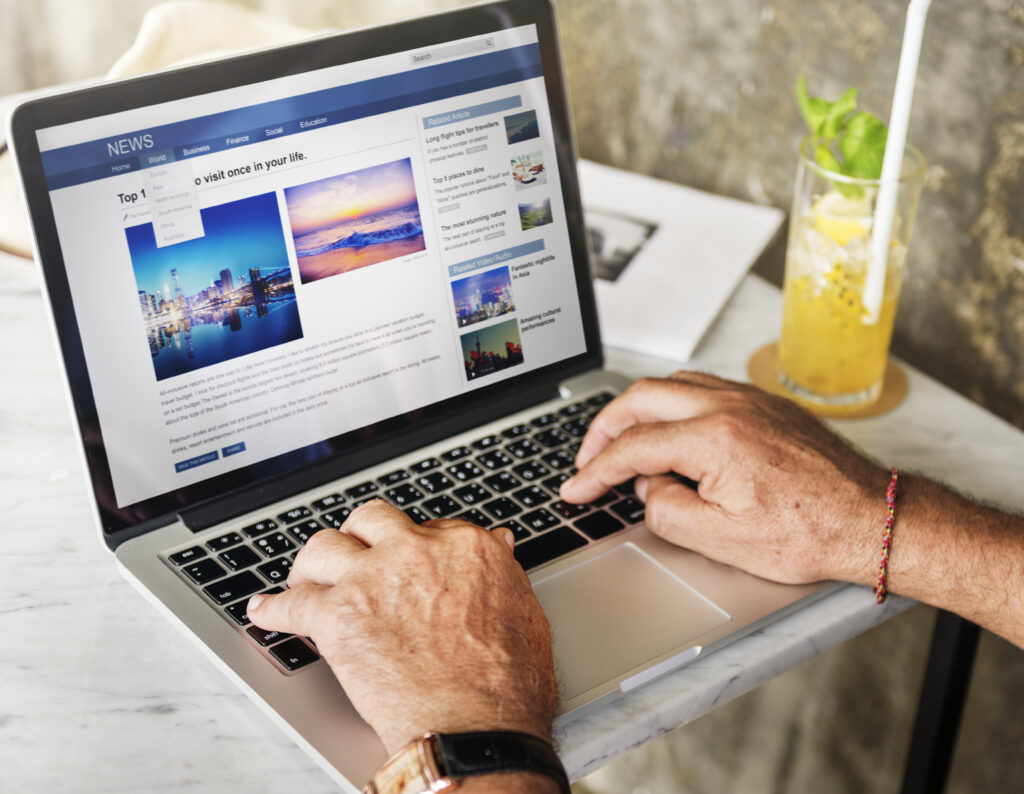
Image by rawpixel.com on Magnific
In about half a second, before you’ve read a single word.
A homepage is a cover too. In a well-known 2006 study, Gitte Lindgaard and colleagues at Carleton University showed people homepages for just 50 or 500 milliseconds and asked how appealing each one looked. Ratings from the two conditions were highly correlated, and that result became the famous claim that a website has 50 milliseconds to make a good first impression.
Later research made the picture more precise. In a 2012 study, Meinald Thielsch and Gerrit Hirschfeld found that judgments made in 50 milliseconds were much less consistent than the original result suggested. Judgments made in half a second, however, matched closely with judgments made after a full ten seconds of looking. So the safer takeaway is this: by the time half a second has passed, most visitors already have a feeling about your page.
From a decision making psychology point of view, that’s worth taking seriously. The words on the page still matter, but they’re read by someone who has already formed an opinion about how the page looks.
Can a Price Tag Change How Wine Tastes?
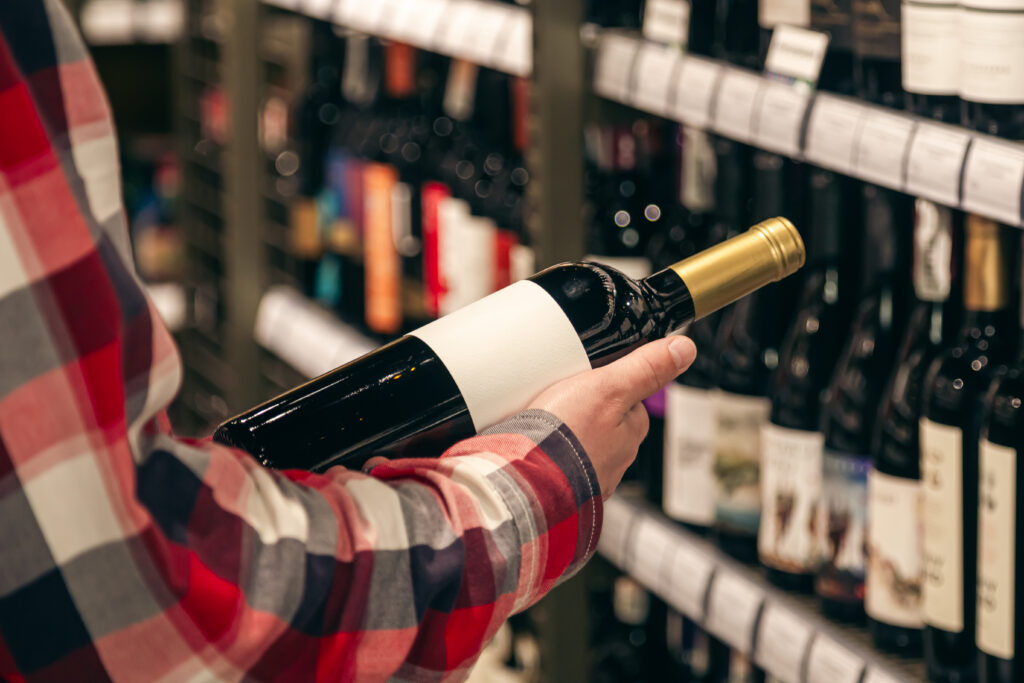
Image by pvproductions on Magnific
It can change how much you enjoy it, and brain activity shows the difference.
Researchers at Caltech and Stanford scanned the brains of 20 people while they tasted wine. The participants believed they were tasting different wines at different prices. In reality, some were the same wine with a different price tag. When a $90 wine was presented as costing $10, people enjoyed it less. When a $5 wine was presented as costing $45, they enjoyed it more.
It wasn’t only what they said. Activity in the medial orbitofrontal cortex, a brain area linked to how pleasant an experience feels, was higher when the price was higher. In a blind tasting with no prices shown, price had no link to how much people liked the wines. The price tag also didn’t change how intense the flavor seemed, only how much it was enjoyed.
This is psychological pricing at its most striking. A price tag isn’t only information about cost. It sets an expectation, and the brain lets that expectation shape the experience itself. With 20 participants it’s a small study, so it’s best read as a clear demonstration rather than the final word.
What Does Psychology and Marketing Research Say About First Impressions?
That they’re fast, confident and often wrong, and that they shape what people choose anyway.
Christopher Olivola and Alexander Todorov tested how useful appearance really is for judging other people. In two large studies, participants guessed facts about people from their photos. They would have been more accurate if they had ignored the photos and simply gone with the most common answer. Appearance often pulled their guesses in the wrong direction.
This is where psychology and marketing meet. A snap judgment doesn’t have to be correct to drive a decision. Among the psychological factors influencing consumer behavior, first impressions are some of the fastest and easiest to miss, because they happen so quickly that people rarely notice them.
Every business has covers that people judge in seconds:
🙂 The faces and photos that represent it
📦 Its packaging and design
💻 Its homepage
🏷️ Its price tag
From eye tracking in a bookshop to brain scans of wine tasters, neuroscience consumer behavior research in the studies above points the same way: people rarely wait for all the facts before deciding how they feel.
So yes, everyone says don’t judge a book by its cover, and almost everyone does it anyway. The more useful question is what your covers are saying before anyone reads a word. Understanding it well enough to design for it, honestly and on purpose, is what the Master in NeuroMarketing at Neuro Business School is built around, available online and on campus in Barcelona. Máster en NeuroMarketing covers the same program in Spanish, available online.
Sources
Psychological Science, Janine Willis and Alexander Todorov, First Impressions: Making Up Your Mind After a 100-Ms Exposure to a Face (2006)
Tourism Management, Eyal Ert, Aliza Fleischer and Nathan Magen, Trust and Reputation in the Sharing Economy: The Role of Personal Photos in Airbnb (2016)
Journal of Documentation, Arūnas Gudinavičius and Andrius Šuminas, Choosing a Book by Its Cover: Analysis of a Reader’s Choice (2018)
Poetics, Alain d’Astous, François Colbert and Imene Mbarek, Factors Influencing Readers’ Interest in New Book Releases: An Experimental Study (2006)
Scientific Study of Literature, Peter Dixon, Marisa Bortolussi and Blaine Mullins, Judging a Book by Its Cover (2015)
Behaviour & Information Technology, Gitte Lindgaard, Gary Fernandes, Cathy Dudek and Judith Brown, Attention Web Designers: You Have 50 Milliseconds to Make a Good First Impression! (2006)
Ergonomics, Meinald Thielsch and Gerrit Hirschfeld, Spatial Frequencies in Aesthetic Website Evaluations: Explaining How Ultra-Rapid Evaluations Are Formed (2012)
PNAS (Proceedings of the National Academy of Sciences), Hilke Plassmann, John O’Doherty, Baba Shiv and Antonio Rangel, Marketing Actions Can Modulate Neural Representations of Experienced Pleasantness (2008)
Journal of Experimental Social Psychology, Christopher Olivola and Alexander Todorov, Fooled by First Impressions? Reexamining the Diagnostic Value of Appearance-Based Inferences (2010)