
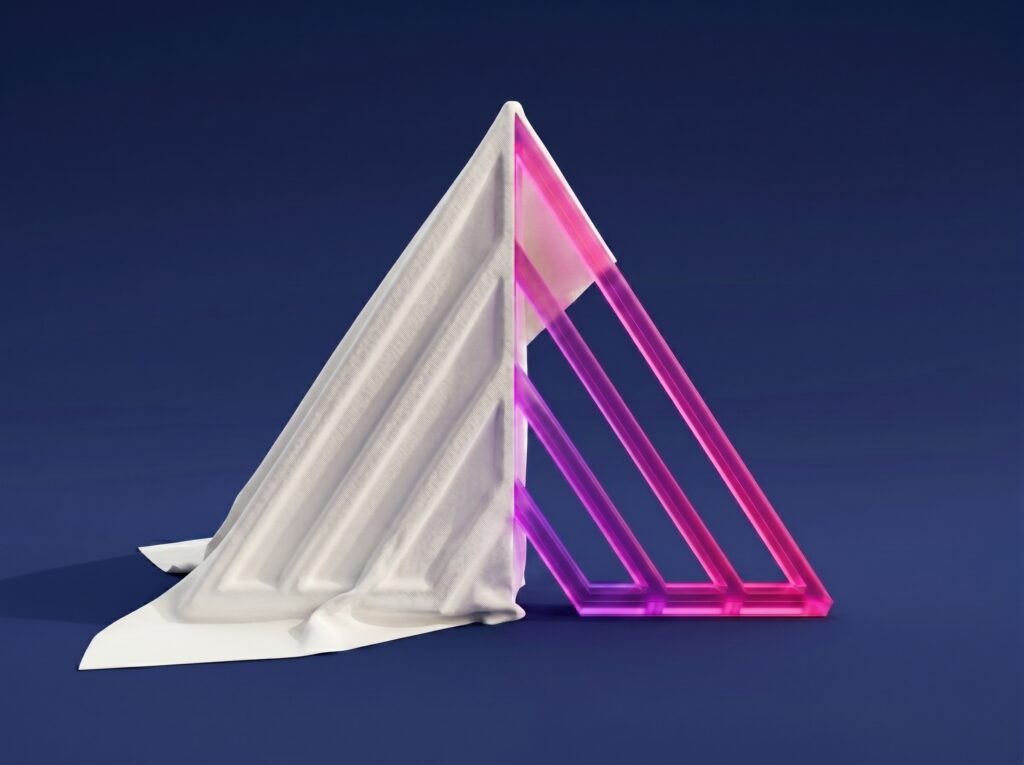
A few days ago, FIFA covered up the Levi’s logo at Levi’s Stadium. The batwing — one of the most recognisable brand marks in the world — was draped under a white tarp as part of the tournament’s “clean venue” policy, which bans any non-sponsor branding from host stadiums. The stadium was temporarily renamed the San Francisco Bay Area Stadium. Levi’s name was, officially, nowhere to be seen.
The video Levi’s posted in response racked up 35.7 million views. The Instagram post cleared 700,000 likes in under 24 hours. Commentators called it the “world cup of marketing moments.”
Nobody was hiding Levi’s. The restriction revealed exactly how strong the brand already was.
What this article covers:
- Why the brain recognises strong brands even when the logo is hidden — and what that tells us about how brand memory actually works
- The neuroscience of psychological reactance: why telling someone they can’t see something makes them look harder
- How Marlboro pulled off the same trick in Formula 1 — and what both cases say about the real value of brand investment
- What limitations reveal about the difference between brands that are built and brands that are merely present
Why Could Everyone Still See Levi’s — Even When It Was Covered?
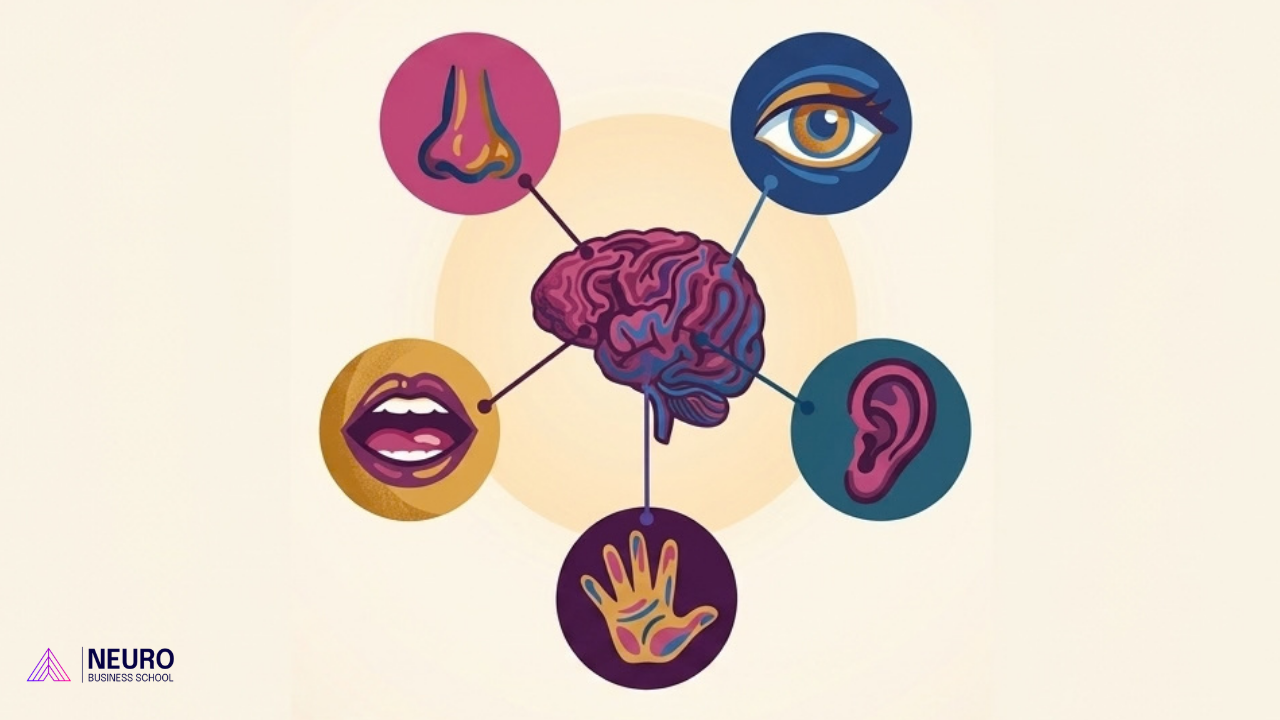
The answer starts with how brand memory is actually stored. Every time you encounter a brand — its colours, its shape, the feeling it consistently produces — your brain encodes that pattern into long-term memory through repeated neural activation. Over time, the brand stops being a conscious reference you have to retrieve. It becomes an automatic recognition response.
This is what Byron Sharp calls mental availability: the probability that a brand comes to mind across a range of buying and recognition situations. A brand with high mental availability is not just remembered — it is recognised. There is a difference. Memory requires retrieval. Recognition fires automatically, often before conscious attention has even registered that something is there.
The Levi’s batwing is one of the most reproduced shapes in twentieth-century commercial history. Billions of jeans. Decades of stadium signage. The logo has been encoded into neural pathways so reliably that covering the name changes almost nothing. The shape alone is enough to trigger recognition. The white tarp did not remove the brand. It put a frame around it.
Almost nobody thinks about this when they’re arguing about brand spend. They should.
The strongest brands don’t need their name visible to be recognised. That’s not a lucky accident. It’s what years of consistent investment produces.
What Happens in the Brain When You’re Told You Can’t See Something?
There is a well-documented psychological phenomenon that makes restrictions backfire in a very specific way. It is called psychological reactance, and it was first formalised by Jack Brehm in 1966. The core finding: when people perceive that a freedom has been restricted — including the freedom to access information, see something, or make a choice — they experience a motivational state that drives them to reassert that freedom.
In plain English: if you tell someone they cannot see something, their brain immediately becomes more interested in it.
The FIFA clean venue policy is, neurologically speaking, a reactance machine. A covered logo draws more visual attention than an uncovered one, because the covering signals that something is being withheld. The brain orients toward restriction the way it orients toward novelty. It wants to know what is underneath.
Levi’s understood this, even if they never used the word reactance. The caption “Welcoming the world to the beautiful [redacted] stadium!” did not try to work around the restriction. It pointed at the restriction and let the brain’s natural curiosity do the rest. The playfulness was not incidental — it was the mechanism.
This is obvious in retrospect. Most viral brand moments are.
This Has Happened Before — and It Worked Then Too
Levi’s was not the first brand to accidentally turn a restriction into a recognition moment. The Marlboro-Ferrari case from Formula 1 is arguably the more dramatic version.
After tobacco advertising bans swept through European motorsport in the 2000s, Marlboro’s logo could no longer appear on Ferrari’s cars. Rather than simply removing it, a barcode pattern appeared on the Ferrari livery — in Marlboro’s red, white and black colour scheme. European health commissioners claimed it was subliminal advertising. Ferrari and Philip Morris denied any intentional connection. The FIA investigated. The barcode was eventually removed.
Whether the barcode was intentional or not is almost beside the point. The restriction generated vastly more press coverage of the Marlboro-Ferrari connection than the original logo ever would have. Every newspaper that ran the story, every health commissioner quoted in outrage, every fan photograph published online — all of it was free brand recognition for a brand that was supposedly invisible.
The mechanism is the same in both cases. A highly encoded brand — one with genuine mental availability built over years of consistent investment — does not disappear when the logo is covered. It becomes a puzzle. And puzzles get attention.

Ferrari F10 barcode livery, Sepang Circuit, 2 April 2010. Image: Morio / Wikimedia Commons / CC BY-SA 3.0
So What Does a Restriction Actually Test?
Both the Levi’s and Marlboro cases point toward the same conclusion, and it is not a comfortable one for most marketing teams.
A restriction does not damage a strong brand. It reveals it. What gets tested when a logo disappears is whether the brand has built anything worth recognising. If the memory encoding is there — if the shape, the colour, the feeling, the associations have been deposited consistently enough to become automatic — then the restriction becomes irrelevant. The brand exists in the brain, not on the sign.
If the encoding is not there, the restriction is catastrophic. A brand that exists only when its name is visible has not built a brand. It has built a label.
This is why the scarcity heuristic applies at the brand level, not just the product level. When something is restricted or removed, the brain treats the restriction as a signal of value. The covered Levi’s logo did not look like a mistake. It looked like something important was being protected. That perception is worth more than the logo itself.
What This Means for How Brands Are Built
The Levi’s moment was not the result of a clever real-time marketing team (though the response was well-executed). It was the result of decades of consistent visual identity investment. The batwing was encoded so deeply into consumer memory that covering the name was never going to work.
Most brands are not in that position. Most brands exist at the mercy of their own visibility — present when the ad runs, absent when it stops. That is not a brand. That is a media buy.
Building real mental availability means the same thing it has always meant: consistent creative identity, emotional resonance built over time, a shape or feeling so distinctive that it fires recognition without needing a name attached. None of that is fast. None of it is cheap. And none of it shows up in this quarter’s conversion report.
But when a regulator, a governing body, or a competitor tries to make you invisible, you find out very quickly whether you built something real.
Levi’s found out in front of 35 million people.
The principles behind cases like this — mental availability, reactance, the neuroscience of brand recognition — sit at the core of what Neuro Business School’s Master in NeuroMarketing applies to real marketing strategy. The program is available fully online, built for professionals who want to understand not just what works, but why — without stepping away from the careers they are already building.
The Tarp Was Never the Story
When a brand gets covered up and becomes more famous for it, the obvious question is: how do we replicate this?
The answer is that you cannot replicate the restriction. You can only do the work that makes a restriction irrelevant.
The tarp was never the story. The story is the decades of jeans, stadium signage, consistent visual language, and emotional association that made the shape recognisable before anyone put a tarp over anything. The restriction was the test. The brand had already passed it.
The real question for any brand is not “what would we do if our logo was covered?” It is: “would anyone notice if it was?”
SOURCES
- Brehm, J.W. (1966). A Theory of Psychological Reactance. Academic Press. Foundational peer-reviewed research on reactance theory.
- Sharp, B. (2010). How Brands Grow. Oxford University Press. Mental availability framework; empirical base is well-supported, some academic debate on universality.
- Ehrenberg-Bass Institute for Marketing Science. Ongoing research programme into brand recognition and memory structures. See Sharp et al., various.
- Levi’s / FIFA World Cup 2026. Multiple verified sources: Inc., NBC Bay Area, WWD, Geo.tv. Instagram post: 700,000+ likes, 35.7M video views, June 2026.
- Marlboro / Ferrari F1 barcode livery. Designboom (2010), Autosport (2010), Campaign Live (2011), Tobacco Tactics (2023). Ferrari and Philip Morris denied intentional subliminal advertising; FIA investigated; barcode removed 2010.