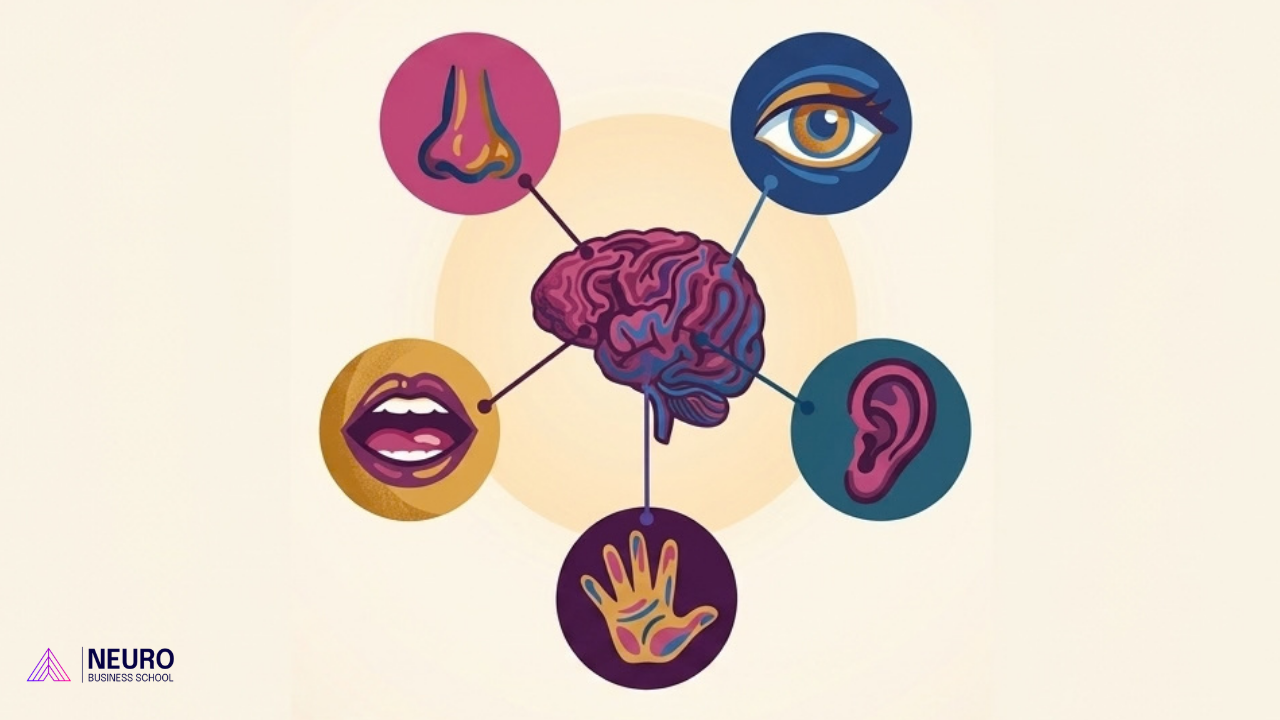


Here is a number that should end the debate: 95% of decisions happen below the threshold of conscious awareness. That finding, from Harvard Business School professor Gerald Zaltman, doesn’t just disrupt how we think about advertising. It indicates an entire industry that has spent two decades optimising for conscious, deliberate choice.
Performance marketing is built on a model of the buyer as a rational agent: show the right message at the right moment, make a clear offer, measure the conversion. That model is not entirely wrong. It just describes the final 5%. Emotional branding works on the other 95% — the part that happens before a buyer even realises they are thinking about your product.
When a performance marketer and a brand strategist argue about budget allocation, they are not disagreeing about tactics. They are arguing about which layer of the brain to target. Neuroscience suggests both are necessary — but not in equal measure, and not at the same time.
A note on what this article is and isn’t: this is not an argument to abandon performance marketing. It’s an argument for understanding what each approach actually does inside the brain — so you can decide when to use which.
The Neuroscience of Brand Memory
When you encounter a brand repeatedly — its colours, tone of voice, the feeling it consistently evokes — your brain encodes that pattern through a process called long-term potentiation. Neural pathways strengthen with repetition. The brand stops being a conscious reference and becomes a low-effort, automatic response.
This matters for buying decisions because the brain runs on energy efficiency. When faced with a purchase choice, the brain doesn’t want to run a full evaluation — it wants to reach for the stored association. Antonio Damasio’s somatic marker hypothesis demonstrates this clearly: people with damage to the emotional processing centres of the brain struggle to make ordinary decisions, even when their rational faculties are intact. Emotion is not a distraction from good decisions. It is the mechanism by which decisions get made at all.
Emotional branding, done well, is the work of building those stored associations. Every consistent visual element, every piece of content that makes someone feel something, every story that connects a brand to a value the buyer already holds — these are deposits into emotional memory. They do not always produce an immediate click. But they determine which brand comes to mind when a buying moment arrives.
Almost nobody talks about this when justifying brand spend to a CFO. They should.
What Performance Marketing Actually Measures
Performance marketing is frequently misunderstood — even by its practitioners. When a retargeting ad converts, it is tempting to attribute that conversion to the ad itself. But the neural groundwork for that purchase may have been laid weeks or months earlier by brand exposure the buyer has already forgotten.
Think of it this way: performance marketing optimises the last mile. It is extraordinarily good at capturing demand that already exists — people who are already in a buying state, already warm to your category, already predisposed to say yes. What it cannot do, on its own, is create that predisposition.
A 2021 study by Binet & Field for the Institute of Practitioners in Advertising (IPA) — the most rigorous long-term study of marketing effectiveness ever conducted — found that the optimal budget split for most categories is approximately 60% brand-building to 40% performance activation. The brands that outperform over a five-year period are the ones that invest in emotional resonance before they invest in conversion.
The risk of over-indexing on performance is structural. You can harvest what brand built. But if no one is planting, eventually there is nothing left to harvest.
Performance marketing optimises the last mile. Emotional branding builds the road.
What ‘Emotional’ Actually Means in the Brain
The word ’emotional’ creates problems in boardrooms. It sounds soft. It sounds unmeasurable. Neuroscience, fortunately, is quite specific about what it means.
Emotional responses are processed primarily by the amygdala and the limbic system. These structures operate faster than the prefrontal cortex — the seat of conscious reasoning. When a brand communicates in a way that triggers any emotional response — warmth, aspiration, humour, tension, belonging — that response is encoded before the conscious brain catches up. The brain doesn’t wait for the rational assessment to happen first.
This has a direct implication for ad creative. Ads that produce an emotional response are processed differently from ads that make a rational case. Neuromarketing research from Nielsen, using EEG and eye-tracking, consistently shows that emotional ads outperform rational-feature ads on long-term memory encoding and brand recall — even when immediate engagement metrics look similar.
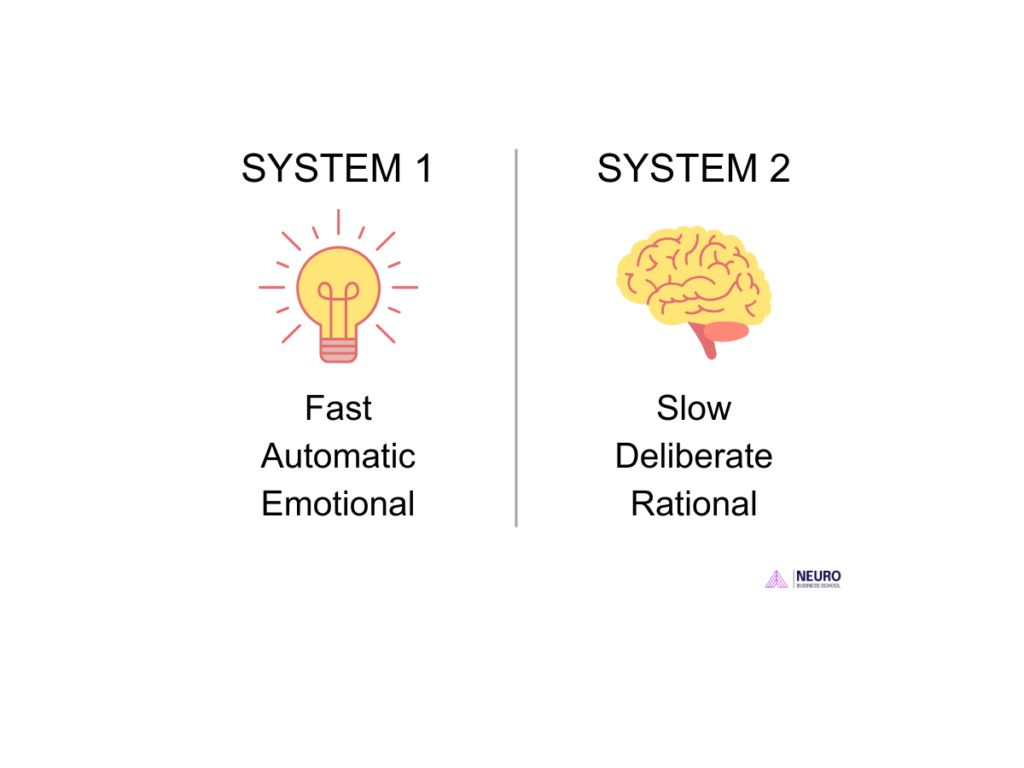
The distinction that matters for marketers is not emotion versus logic. It is fast versus slow. Brand investment works on the fast, automatic system. Performance copy works on the slow, deliberate system. They speak to different parts of the brain — and both have a role.
The ’emotional’ vs. ‘rational’ framing is about 30 years out of date. The actual distinction is automatic processing vs. deliberate processing — what Kahneman calls System 1 and System 2. Dual-process theory has been consensus in cognitive psychology since at least 2011.

The Compounding Advantage of Brand Investment
Performance marketing returns are roughly linear. Spend more, get proportionally more conversions — until your audience saturates and returns diminish. Brand-building returns, by contrast, are compounding. The emotional associations built this year make next year’s performance campaigns cheaper and more effective.
This is what Binet & Field describe as ‘the compounding advantage‘ — a cumulative effect where consistent emotional investment reduces the cost per acquisition over time, because more buyers arrive already warm. Brands that have spent a decade building emotional resonance — Apple, Nike, Patagonia — enjoy acquisition costs that are structurally lower than their competitors, not because of cleverer ads, but because the mental availability is already there.
Byron Sharp’s work at the Ehrenberg-Bass Institute adds another dimension: brand-building primarily works through memory structures. The more memory structures a brand activates (visual, auditory, emotional, contextual), the more likely it is to be recalled at the buying moment. This is why consistent brand identity across touchpoints is not just an aesthetic preference — it is a neuroscience-grounded strategy for reducing the brain’s search cost at the point of purchase.
What this means practically: if you are managing a marketing budget and all performance metrics look healthy, the question to ask is whether you are investing enough to refill the brand reservoir. Short-term conversion metrics will not tell you. The problem shows up 18 months later when cost-per-acquisition starts rising without an obvious cause.
The Price Perception Consequence
There is a commercial argument for emotional branding that deserves more attention: it changes what buyers believe your product is worth.
The prefrontal cortex evaluates price. But the emotional system establishes the reference point before any evaluation begins. A buyer who has been exposed to consistent, aspirational brand communication arrives at a pricing decision already positioned to pay more — not because they have been deceived, but because the emotional framing has genuinely altered their perception of value.
Studies by Hilke Plassmann at INSEAD using fMRI scanning found that participants who were told wine cost more reported higher enjoyment — and that this self-report was matched by increased activation in reward-processing regions. The price signal itself modifies the subjective experience. For marketers, the implication is sobering: brand feeling is the bid. How your audience feels about your brand before they see your price determines whether your price feels reasonable or punishing.
Performance marketing, which often competes on price through promotions and discount signals, can undermine this over time. Consistent discounting trains buyers to wait for the promotion rather than value the brand. The dopamine spike of a deal creates a mental anchor that makes full price feel like a loss.
Why This Debate Keeps Going
If the evidence is this clear, why does the emotional vs. performance debate still dominate marketing conversations? Because the incentive structures are not aligned with the evidence.
Performance marketing is measurable in real time. Brand investment produces results that show up quarters or years later, in ways that are genuinely harder to attribute. Finance functions reward short-term legibility. CFOs who have never encountered the Binet & Field data are not being irrational when they question brand spend — they are optimising for the metrics they can see.
The answer is not to abandon measurement. It is to build better measurement models — ones that track brand health indicators (awareness, consideration, price premium tolerance) alongside conversion metrics, and that connect the two in a long-horizon model. This is not easy. It requires organisational patience and analytical sophistication. But it is the only way to stop the cycle of companies cutting brand spend in tough quarters and then wondering why their performance costs double two years later.
If you are working in marketing today and want to understand not just what works but why — at the level of how the brain actually processes brand experiences — that question has a programme built around it.
The Master in NeuroMarketing at Neuro Business School is designed for professionals who want that understanding without stopping your current career — available fully online, so the science translates directly into the work you are already doing.
The Brain Has Already Decided
The emotional vs. performance debate was never really about channels or tactics. It was always about a more fundamental question: which model of human decision-making are you designing for?
Performance marketing answers that question with rational actor theory — a useful fiction that describes a tiny fraction of actual buying behaviour. Emotional branding answers it with neuroscience — a less convenient truth that requires longer time horizons and harder-to-defend budget decisions.
The marketers who are winning right now are not the ones who chose one side. They are the ones who understand when to invest in the slow work of building emotional availability, and when to activate it with precise, measurable performance campaigns. Both have a place. The brain needs both. The ratio just matters more than most budget conversations acknowledge.
The real question is: are you building the mental shelf space your brand will need in two years — or just harvesting what someone else planted?
Sources
Zaltman, G. (2003). How Customers Think. Harvard Business Press. The 95% figure is a modelled estimate of non-conscious processing share, not a controlled experimental result — widely cited but treat as directional.
Damasio, A. (1994). Descartes’ Error: Emotion, Reason, and the Human Brain. Penguin. Peer-reviewed neuroscience; the somatic marker hypothesis is well-established.
Binet, L. & Field, P. (2013, updated 2021). The Long and the Short of It. IPA. The 60/40 figure is a median finding across categories — not a universal rule.
Nielsen Neuro (2016). Under the Influence: Consumer Trust in Advertising. Industry research using biometric methods; not peer-reviewed but methodology is publicly disclosed.
Plassmann, H. et al. (2008). Marketing actions can modulate neural representations of experienced pleasantness. PNAS, 105(3), 1050–1054. Peer-reviewed.
Sharp, B. (2010). How Brands Grow. Oxford University Press. Core mental availability findings are well-supported; some academic debate on universality.[7] Kahneman, D. (2011). Thinking, Fast and Slow. Farrar, Straus and Giroux. System 1/System 2 dual-process theory; decades of peer-reviewed grounding.