
What this article covers:
- 📊 What “marketing” covers, and where neuromarketing fits inside it
- 🔬 The actual methods that separate the two, in practice
- 🧠 Why self-reported answers and brain data don’t always agree
- ✅ How to know which one to reach for, and when
Two Cups. No Labels. A Twist Nobody Expected.

In 2004, researchers at Baylor College of Medicine gave 67 people two unmarked cups of soda. One held Coke Cola, one held Pepsi. Nobody knew which was which.
Tasted blind, preferences split almost evenly. If anything, Pepsi edged ahead slightly.
Then the researchers ran the test again. Same cups, same drinks. The only difference: this time, people could see the label before they tasted.
The instant the Coke logo appeared, something shifted. A brain region tied to reward and emotional memory lit up, and stated preference swung hard toward Coke Cola, even among people who’d picked Pepsi minutes earlier, blind.
Nothing about the drink had changed. The only new variable was a logo. And it was enough to flip the result.
That’s the split this whole article is about. Marketing built the Coke brand — decades of it. Neuromarketing is what let researchers actually watch that branding change a decision in real time, inside the brain, before anyone had a chance to explain why.
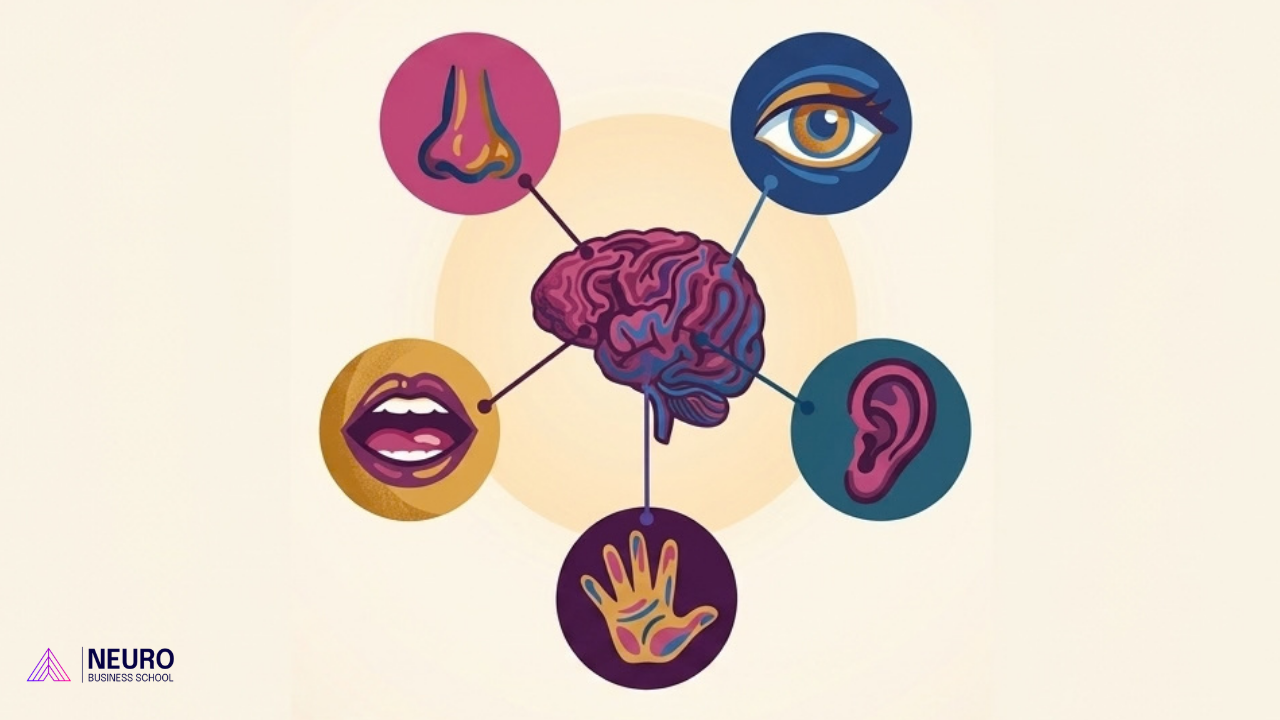
Neuromarketing isn’t a rebrand of marketing. It’s a research method that sits inside the broader discipline — built to measure what the brain and body actually do, rather than relying only on what people say about their own reactions afterward.
What Marketing Covers — and Where Neuromarketing Fits
Marketing is the umbrella: market research, brand strategy, pricing, advertising, PR, campaigns. Its traditional toolkit runs on self-report — surveys, focus groups, interviews, purchase history. Fast, affordable, scalable in a way lab research never will be.
The limit isn’t that self-report is useless. It’s that people are often unreliable narrators of their own decisions — not from dishonesty, but because a lot of what drives a purchase happens somewhere self-report can’t reach. Ask the Coke drinkers above why they preferred it, and almost none would say “because the logo activated my reward circuitry.” They’d invent a taste explanation instead.
Neuromarketing flips the question. Instead of asking what someone felt, it measures what their brain and body actually did, before the conscious mind has a chance to construct an explanation.
| Marketing | Neuromarketing | |
| Core question | What do people say they think? | What does the brain/body actually do? |
| Primary method | Surveys, focus groups, interviews | EEG, eye-tracking, facial coding, GSR |
| Captures | Stated preference, self-report | Attention, emotional intensity, memory encoding |
| Best for | Strategy, positioning, segmentation | Testing what surveys can’t reach |
Neither one is “more scientific” than the other — they’re built to catch different layers of the same response.
Why Don’t People’s Answers Match Their Brain Data?
In 1977, psychologists Nisbett and Wilson showed that people often have little real introspective access to what’s driving their own judgments. Asked to explain a decision, people don’t retrieve the actual cause — they construct a plausible-sounding story after the fact. That’s exactly what the Coke drinkers did.
Self-report tells you what someone believes about their reaction.
Neuromarketing measures the reaction itself — before the belief gets constructed.
Neither is wrong. They’re capturing different stages of the same process.
Is Neuromarketing Replacing Traditional Marketing?
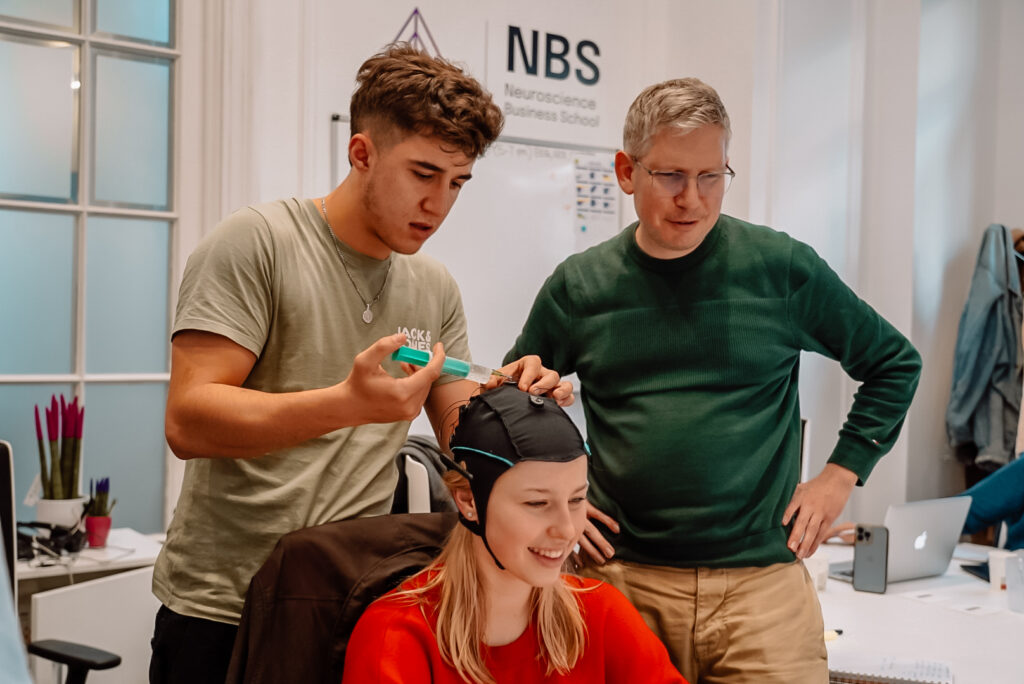
No — and this is where most of the confusion comes from. Neuromarketing is a specialized subset: the toolkit for questions like which package design draws attention fastest, or which five seconds of a video ad actually hold emotional engagement. It’s not built to replace positioning or campaign strategy. It sharpens what a survey alone can’t test.
Most brands never touch an EEG lab but use neuromarketing thinking constantly — loss aversion, anchoring, attention hierarchy all trace back to this research and now run through everyday marketing without a single scan. That’s arguably neuromarketing’s biggest real-world impact: not the hardware, but the insight it generated getting absorbed into ordinary practice.
Where the term comes from: Rotterdam professor Ale Smidts coined “neuromarketing” in 2002. The Coke Cola study above, run at Baylor around the same period and published in 2004, became one of the field’s founding pieces of evidence. By 2011, Nielsen had acquired NeuroFocus, a clear sign the field had moved from academic curiosity to commercial infrastructure.
Which One Actually Predicts What People Will Buy?
Neither one, alone, reliably. The strongest work combines both: use marketing’s tools to understand stated preference and positioning, then use neuromarketing’s tools to check whether what people actually respond to matches what they say. When the two disagree, that gap is often the most useful data point in the whole project — the reason a campaign looks great on paper and still underperforms, or a “boring” concept quietly wins.
Build This Skill

Knowing when self-report is enough, and when it isn’t, is the actual skill here, more valuable day to day than mastering any single research method on its own.
That’s the exact territory Neuro Business School’s Master in NeuroMarketing is built around — treating marketing and neuromarketing as connected disciplines, not competing ones. It’s fully online. For anyone earlier in that path, the Bachelor in Neuromarketing covers the same foundations. Both are built for people who want to understand why people decide — not just what they say when asked.
Sources
McClure, S. M., Li, J., Tomlin, D., Cypert, K. S., Montague, L. M., & Montague, P. R. (2004). Neural correlates of behavioral preference for culturally familiar drinks. Neuron, 44(2), 379–387.
Smidts, A. (2002). Kijken in het brein (“Looking into the Brain”), inaugural address, Rotterdam School of Management, Erasmus University.
Nisbett, R. E., & Wilson, T. D. (1977). Telling more than we can know: Verbal reports on mental processes. Psychological Review, 84(3), 231–259.
Nielsen’s 2011 acquisition of NeuroFocus — widely reported industry event, company-reported rather than peer-reviewed.