
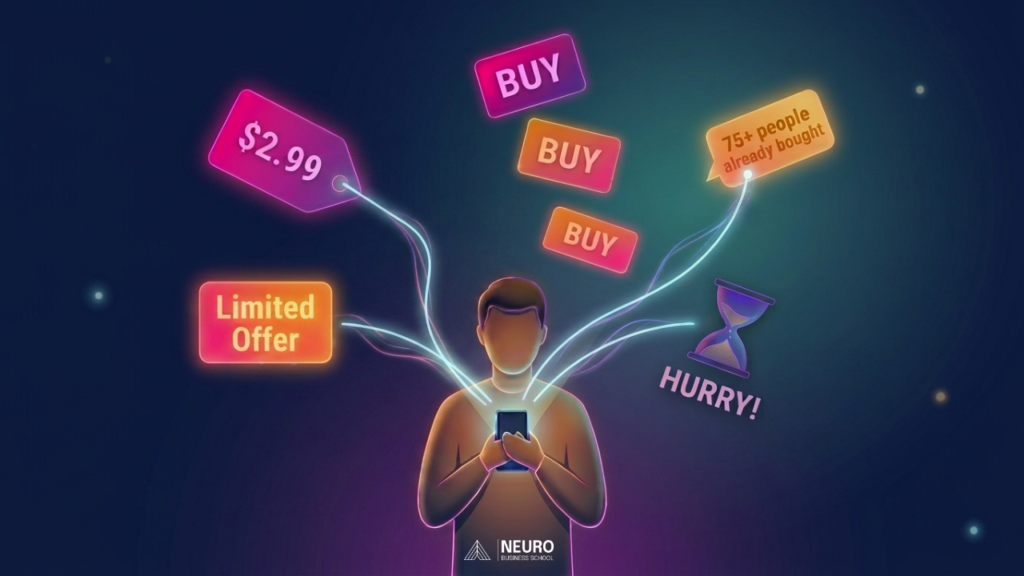
Almost every purchase you make today is shaped by neuromarketing: the deliberate use of psychology and consumer behavior research to influence buying decisions before you’ve consciously weighed anything. None of it requires deception. It just requires knowing how the brain actually processes price, urgency, and social cues, then designing around it. Neuromarketing works precisely because these responses are automatic and largely unconscious, not because shoppers are being tricked in any legal sense. You’ve probably been on the receiving end of at least a few of these tactics this week without noticing a single one, and the five below are among the most common you’ll run into between now and your next online purchase.
What this article covers:
💵 Why $19.99 feels nothing like $20
⏳ How countdown timers manufacture urgency out of nothing
🔴 What actually makes a “Buy Now” button work (it isn’t the color)
👥 Why “14 people bought this today” changes your decision
📊 How a progress bar keeps you from walking away
Why Does $19.99 Feel So Different From $20?
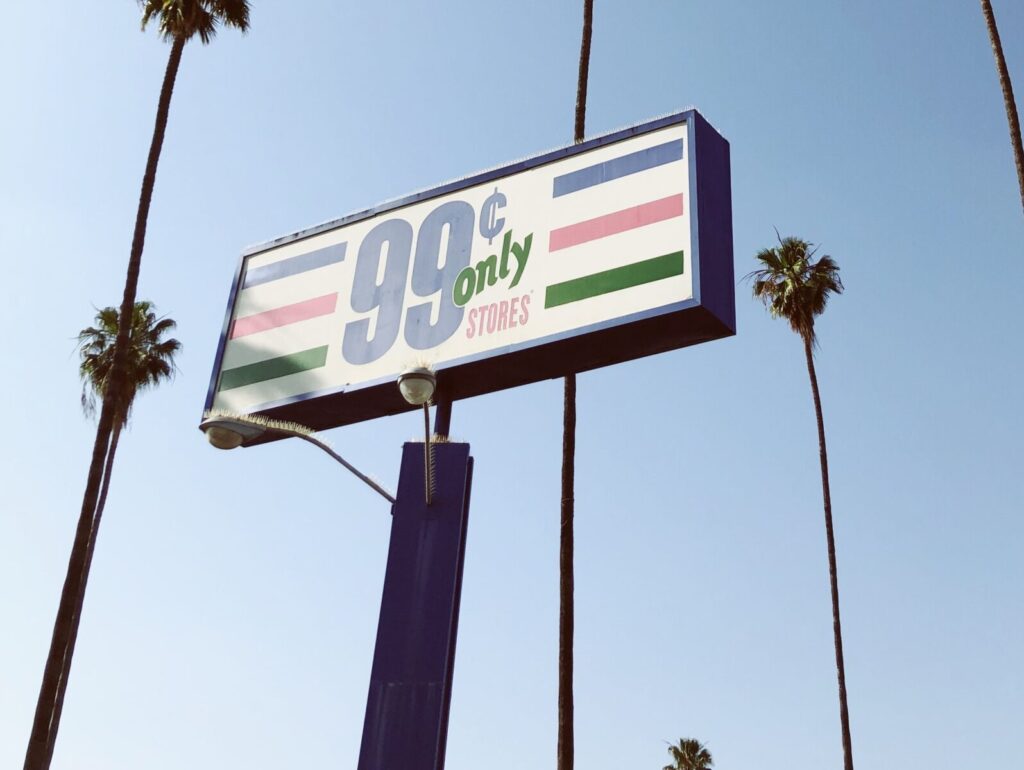
Photo by Liza Lova on Pexels
Your brain reads numbers left to right, and it stops paying close attention after the first digit. Researchers Manoj Thomas and Vicki Morwitz tested this directly and found that dropping a price from $3.00 to $2.99 made shoppers perceive a bigger discount than dropping it from $3.00 to $2.66, even though the second discount is objectively larger. They called it the left-digit effect: the brain encodes “2.99” as closer to two dollars than three, and that anchor sticks even when you consciously know the real number rounds up.
This is why almost nothing in retail or subscription pricing lands on a round number, from grocery aisles to SaaS pricing pages to program tuition listings. The .99 isn’t really about looking cheaper by a single cent. It’s about which digit your brain locks onto first, and everything that comes after that digit barely registers unless you deliberately slow down and do the math yourself.
How Do Countdown Timers Manufacture Urgency Out of Nothing?
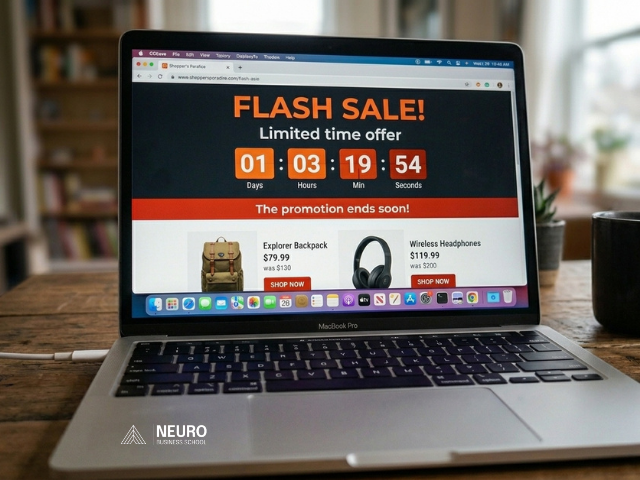
A countdown timer on a checkout page rarely tracks anything real. Most reset the moment you refresh the browser, and plenty run on a loop regardless of actual inventory. But the psychological principle behind it is real: scarcity, one of the most consistently replicated drivers of behavior in consumer psychology. Robert Cialdini’s foundational research on influence found that people assign more value to opportunities specifically because they’re scarce or about to disappear, independent of the item’s actual value.
Almost nobody stops to check whether the timer is genuine. That’s the point. Flash-sale apps and travel booking sites lean on this constantly, sometimes with real countdowns tied to real, shrinking inventory, and sometimes with neither. The two versions produce the same racing feeling in your chest either way, which is exactly why the tactic keeps working regardless of which version you’re looking at.
The fix isn’t ignoring every timer on sight. It’s asking one simple question before you click: would you still want this at this price tomorrow, with no clock attached to it at all?
Does the Color of a “Buy Now” Button Actually Matter?

Image by d3images on Magnific, edited by NBS
This is the neuromarketing claim due for some skepticism. Countless marketing blogs still cite a single, small-sample A/B test claiming red buttons outperform green ones by a striking margin, treating one company’s result as universal law across every industry and audience. The more careful research on button design points somewhere far less dramatic: contrast against the surrounding page, not hue, is what reliably draws the eye and drives clicks. A red button on a red-heavy page performs badly. A high-contrast button in almost any color performs well, which is a far less exciting headline than “red sells more.”
If a button is working on you, it’s probably not because it’s red. It’s because it’s the only element on the page competing for your attention, and the layout around it was built carefully to make sure of that. Marketers love a color story because it’s simple to repeat. The actual mechanism is duller and more about design discipline than paint chips.
None of this is manipulation in the movie-villain sense.
It’s applied psychology, built deliberately instead of stumbled into by accident.
Why Does “14 People Bought This Today” Change Your Decision?
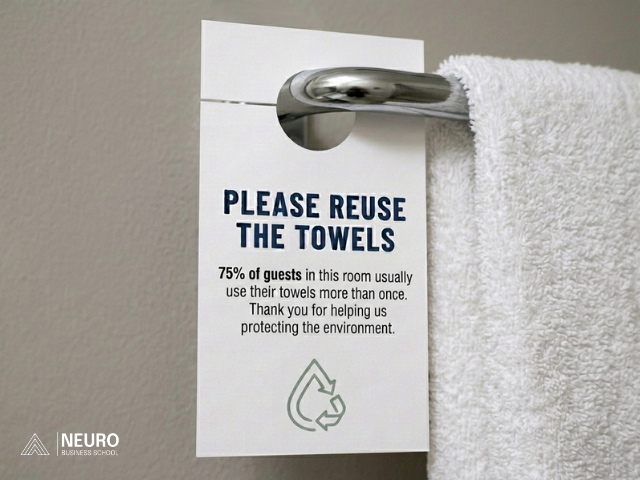
Social proof is one of the best-tested principles in consumer psychology, and one classic field study makes the case cleanly. Researchers Noah Goldstein, Robert Cialdini, and Vladas Griskevicius tested hotel signs asking guests to reuse towels. A generic environmental appeal produced modest results. A sign stating that 75% of guests in that specific room had already reused their towel outperformed it substantially: same request, far higher compliance, purely from knowing what people like you had already done.
That’s the exact mechanic behind “14 people bought this today,” “23 people are viewing this right now,” or a product page quietly showing how many others added the same item to their cart this hour. You’re not being handed a fact so much as a norm, and your brain treats norms as evidence worth acting on without much further scrutiny.
The number itself rarely matters as much as what it implies: people like you already decided this was worth it, so part of the decision is already made before you’ve consciously weighed anything
Why Can’t You Stop Once the Progress Bar Starts Filling?
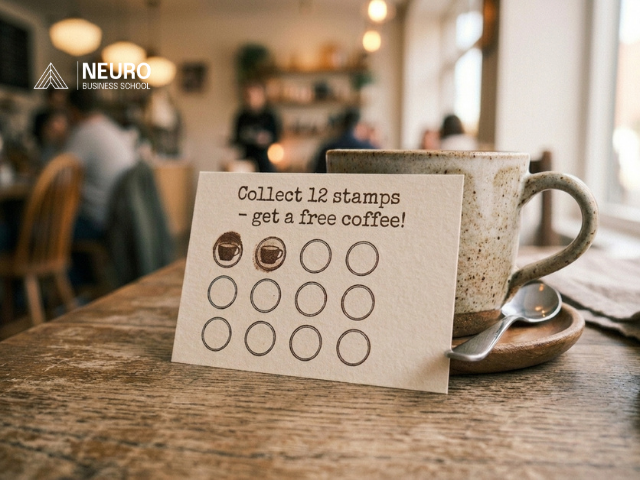
Progress bars on checkout flows, loyalty programs, and sign-up forms tap into something researchers call the goal-gradient effect: effort and motivation increase the closer you get to a finish line, even an arbitrary one someone else drew for you. In a study by Ran Kivetz, Oleg Urminsky, and Yuhuang Zheng, one group of coffee shop customers got a standard 10-stamp card starting from zero. Another group got a 12-stamp card with 2 stamps already filled in as a head start. Both groups still needed 10 more purchases to earn the free coffee, but the group with the head start finished faster.
An empty cart or a blank sign-up form doesn’t trigger much urgency on its own. A bar that’s already 80% full does, because walking away suddenly feels like losing progress you already made, not just skipping something you never started. Profile-completion bars and onboarding checklists use the identical mechanic well outside of retail, borrowing the same instinct that makes an unfinished task harder to abandon than one you haven’t begun.
That’s rarely genuine progress toward something you chose freely. More often, it’s a bar designed carefully enough that stopping starts to feel like a loss instead of simply an option.
The Takeaway
None of these five tactics are secret, and none of them are inherently dishonest. Left-digit pricing, scarcity, contrast, social proof, and the goal-gradient effect are documented, testable, and taught in business schools in exactly the way any other consumer psychology skill is. What actually separates a company using them well from one using them badly usually has nothing to do with the tactic itself. It’s whether the underlying offer holds up once the psychology is stripped back away, and whether the person deploying it actually understands why it works instead of just copying what a competitor’s checkout page happens to do.
Understanding these patterns doesn’t require stepping away from the work you’re already doing. It just requires learning to see the mechanism instead of only feeling its effect.
The Master in NeuroMarketing at Neuro Business School teaches this from the inside: how these patterns are built, why they work at a neurological level, and how to apply them to a product worth buying in the first place. Available fully online, for anyone who wants to build this skill without pausing the career they’re already running.
Sources
1. Thomas, M., & Morwitz, V. (2005). Penny Wise and Pound Foolish: The Left-Digit Effect in Price Cognition. Journal of Consumer Research, 32(1), 54–64.
2. Cialdini, R. B. (1984). Influence: The Psychology of Persuasion. Harper Business.
3. Goldstein, N. J., Cialdini, R. B., & Griskevicius, V. (2008). A Room with a Viewpoint: Using Social Norms to Motivate Environmental Conservation in Hotels. Journal of Consumer Research, 35(3), 472–482.
4. Kivetz, R., Urminsky, O., & Zheng, Y. (2006). The Goal-Gradient Hypothesis Resurrected: Purchase Acceleration, Illusionary Goal Progress, and Customer Retention. Journal of Marketing Research, 43(1), 39–58.