
You know the feeling of a song getting stuck in your head, then fading, then somehow hitting just as hard the first time you hear it again years later. Advertising runs on the exact same wiring. Brands aren’t just repeating themselves. They’re timing when to stop, and when to bring something back.
It’s the same theme covered in how your brain treats AI like a second memory and why deadlines hijack the same circuitry as procrastination: your brain running old, efficient shortcuts on situations that feel brand new. Advertising just makes the pattern easier to see.
Why Do You Stop Noticing the Same Ad?

Image by benzoix on Magnific
Your brain reacts strongly to anything it hasn’t processed before. A new slogan, a new visual, a new jingle all get full attention the first few times. That reaction fades fast, and it’s not a flaw. It’s habituation: repeated exposure to the same stimulus produces a measurably smaller response each time, down to the neural level. An fMRI study tracking brain activity during repeated exposure to the same message found this pattern directly, along with rising mind-wandering as the repetition continued.
Consumer behavior research shows ads follow the identical curve. The first few exposures build familiarity and recognition. After that, the brain has extracted what it needs and starts tuning out, whether or not the brand keeps paying for the placement.
Why Do Ads Stop Working the More You See Them?
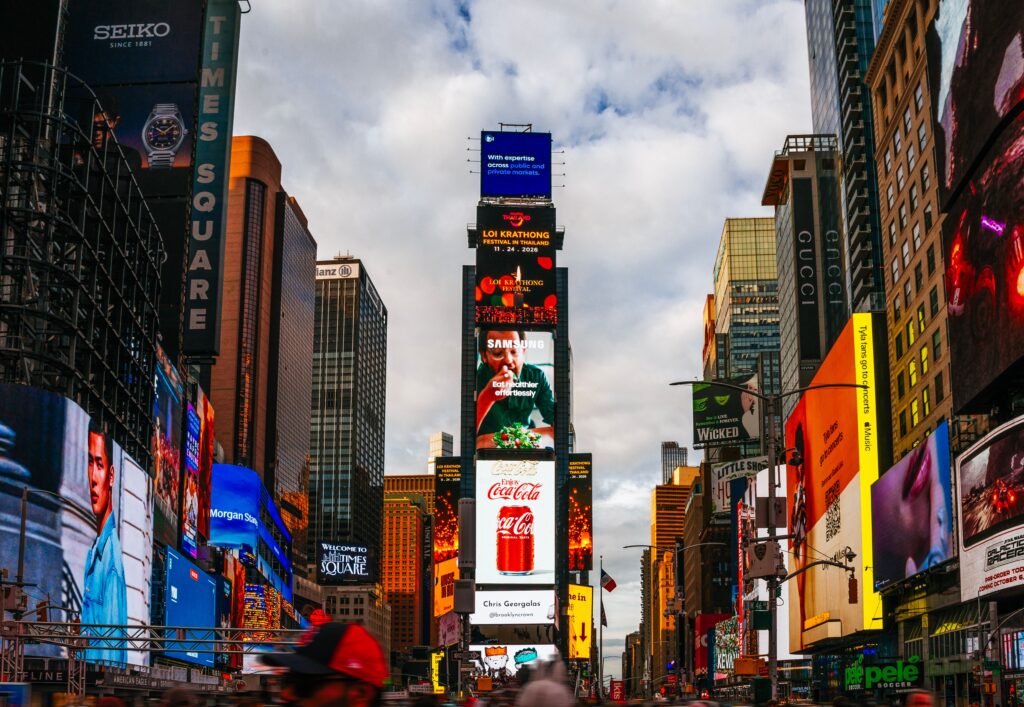
Photo by Quintin Gellar on Pexels
This is where behavior advertising research gets specific. Repetition works in two opposite directions. Early repeats help: they reduce uncertainty about something unfamiliar and build recognition. Push past that point, and the same repetition starts working against the brand. Researchers call this wearout, and it comes in two forms: cognitive wearout, where there’s simply nothing new left to process, and affective wearout, where the emotional response curdles into irritation.
Research from the Ehrenberg-Bass Institute found emotionally driven ads hold up 20 to 30 percent longer than purely informational ones before wearout sets in. That’s why a funny or moving ad can survive far more repetition than a straightforward product comparison.
Old Spice’s “The Man Your Man Could Smell Like” campaign is a clean example of the same curve. It launched to genuine acclaim, sharp writing, an unexpected format, and it worked. But the format kept running well past the point of novelty, and the audience’s reaction shifted from delighted to indifferent, the exact cognitive-wearout pattern the research describes. Strong creative buys more time before wearout sets in. It doesn’t buy immunity from it.
The same repetition that builds trust also builds boredom.
Timing is the entire difference.
Why Do Old Jingles and Slogans Suddenly Work Again?
Brands sometimes deliberately dig up an old, retired ad, slogan, or jingle years later, and it works again. Burger King brought back its 1970s “Have It Your Way” jingle decades after retiring it, betting that most of the current audience had never consciously heard it in the first place.
Morrisons revived its “More Reasons to Shop at Morrisons” slogan and jingle for a recent campaign, decades after it first ran, on the same logic: most shoppers no longer consciously remembered the original. Branston did something similar, bringing back its 1970s “Bring Out the Branston” line for a new campaign built on the same bet. In both cases, enough time had passed for the phrase to land as a discovery instead of a repeat.
The logic in every case is the same: enough time has passed that most people no longer consciously remember the original, so the brain processes it as new again rather than as a repeat.
So Should Brands Repeat or Retire Their Ads?
Neither, permanently. The brain’s response to repetition isn’t a switch, it’s a curve, and the two mistakes sit at opposite ends of it: pulling a genuinely strong ad too early out of caution, or running it long past the point where the audience stopped learning anything new from it. Reading where a specific campaign sits on that curve, not guessing at it, is exactly the kind of applied psychology behind good media planning.
That’s also the more useful way to think about repetition generally, in marketing and well beyond it. The same brain that gets bored of an ad after too many repeats is the brain deciding, in the background, what else in a business is worth someone’s attention twice. Understanding that mechanism well enough to use it on purpose, rather than by accident, is exactly what the Master in NeuroMarketing at Neuro Business School is built around, available fully online.
FAQ:
Can the same ad really work on someone twice?
Yes, if enough time passes between exposures. The brain’s response to a repeated stimulus fades with habituation, but that response can return once the stimulus has been absent long enough to feel unfamiliar again.
What is ad wearout?
Ad wearout is the point where repeated exposure to the same ad stops building familiarity and starts producing boredom or irritation instead. It comes in two forms: cognitive (nothing new to process) and affective (emotional fatigue).
Why do brands bring back old jingles and slogans?
Because enough time has usually passed that most of the audience no longer consciously remembers the original version, so it can generate a fresh reaction instead of a repeat one.
Sources
1. Frontiers in Psychology; fMRI study on repetition suppression from repeated message exposure, “Repetition of Computer Security Warnings Results in Differential Repetition Suppression Effects,” cited for the general habituation mechanism
2. Advergize, “What is Wearout in Advertising?” — cognitive vs. affective wearout, Ehrenberg-Bass Institute research on emotional vs. informational ad longevity
3. ResearchGate / Journal of Advertising Research; study on brand familiarity and advertising repetition effects, based on Berlyne’s two-factor theory (wear-in / wear-out)
4. Marketing Week, “Everything old is new again: Why are brands resurrecting old assets?” — Morrisons, Branston, Tango case studies
5. eMarketer, coverage of Burger King’s revival of its 1970s “Have It Your Way” jingle