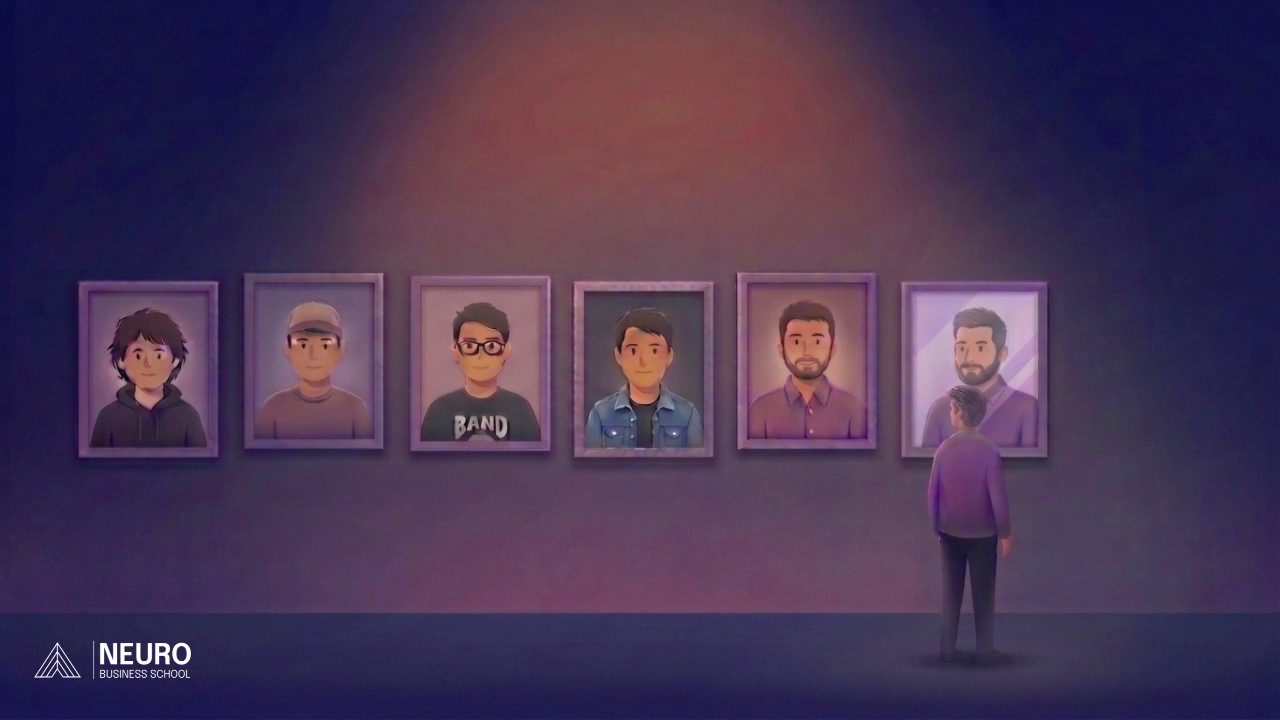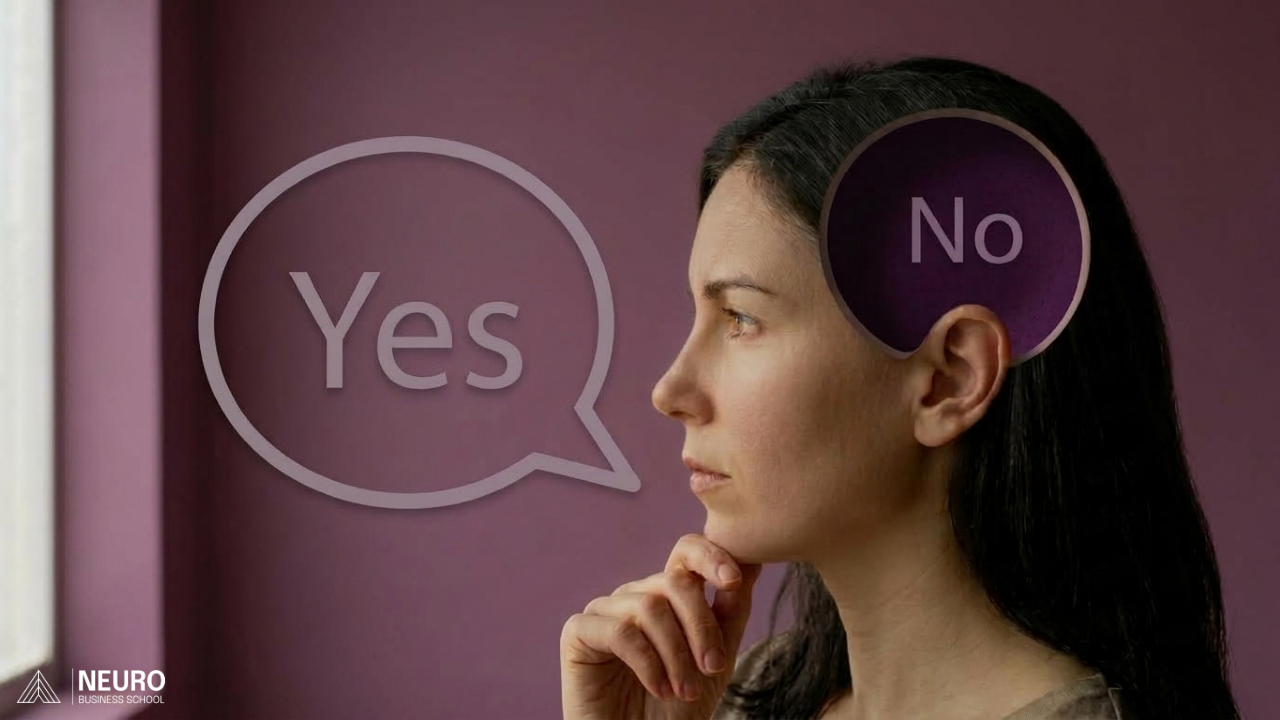


The offer looks good on paper. Then the doubts start: what if there’s a better one coming, what if this is the wrong call, what if six more spreadsheets would settle it. Days pass. The spreadsheets multiply. The decision doesn’t get closer, it gets further away, buried under its own analysis.
That stall has a name: analysis paralysis, the point where thinking about a decision starts working against making it. It happens on hiring calls, pricing decisions, marketing budgets, career moves, almost anywhere a lot is riding on getting it right. The instinct is to gather more information. The research says otherwise, at least past a certain point, and it says something more specific than “trust your gut” or “just decide already.” It points to when overthinking genuinely helps, when it doesn’t, and what to do about it either way.
What this article covers:
🧩 Why more options and more analysis can make a decision harder, not easier
😴 Whether “decision fatigue” holds up as real science
🧠 What actually happens when you step away from a hard decision
⚡ Whether gut calls are as reliable as careful analysis, and when
🎯 What to actually do the next time you’re stuck
Why Does Analysis Paralysis Make Decisions Worse, Not Better?

Photo by Tima Miroshnichenko on Pexels
Analysis paralysis is what happens when the effort spent evaluating a decision stops improving it and starts working against it. More options, more spreadsheets, more opinions gathered, all in service of a choice that isn’t actually getting clearer.
A 2010 meta-analysis by Benjamin Scheibehenne, Rainer Greifeneder, and Peter Todd pooled 50 separate studies on choice overload and found the average effect across all of them was close to zero. More choice doesn’t reliably backfire on its own. It reliably backfires under four specific conditions:
- • the choice set is genuinely complex;
- • the decision itself is hard;
- • personal preferences aren’t clear going in;
- • the goal is to minimize effort rather than get the best possible outcome.
That’s a more useful finding than “less choice is always better,” because it tells you exactly when to worry. Hiring for a role you’ve never hired for, choosing between vendors with no clear front-runner, picking a strategy when the market itself is unpredictable, all four conditions, at once. That’s where more analysis stops helping and starts stalling the decision.
What this means for you: if you can’t tell what you actually want out of a decision, adding more options won’t fix that. It usually just adds more things to be unclear about.
Is “Decision Fatigue” Real?

Photo by Gustavo Fring on Pexels
The popular idea is that willpower works like a tank that drains over the course of a day, so every decision you make leaves less in reserve for the next one. In 2016, 23 independent research labs put that idea to a rigorous test: a pre-registered replication using a single standardized protocol across more than 2,100 participants. The result, published in Perspectives on Psychological Science, found effect sizes close to zero across nearly every lab.
That doesn’t mean the feeling of being worn down by decisions is fake. It means the specific mechanism, a literal tank of willpower running dry, probably isn’t what’s causing it. What’s more likely happening is closer to plain working memory overload: every open decision takes up space, and juggling many of them at once leaves less attention for the one that actually matters.
What this means for you: the fix probably isn’t “rest your willpower.” It’s closing out the small decisions early, so the big one isn’t competing with fifteen open tabs in your head.
The point isn’t to think less. It’s to know when thinking more stops helping.
What Happens When You Stop Consciously Thinking About a Decision?

The idea that the mind keeps working on a hard problem after you’ve consciously stopped, sometimes called unconscious thought, is a popular one, and the strongest evidence for it comes from research on what’s known as the incubation effect: stepping away from a problem measurably helps you solve it later. A 2009 meta-analysis by Ut Na Sio and Thomas Ormerod, drawing on decades of prior research, confirmed a genuine, positive incubation effect, strongest for problems that need open-ended, divergent thinking rather than a single correct answer.
The details matter. Longer initial time spent on the problem before stepping away produced a bigger benefit. And what you do during the break matters too: a light, undemanding task produced better results than either pure rest or a mentally demanding distraction. Checking email doesn’t count as a break. A walk does.
What this means for you: stepping away from a hard decision isn’t avoidance, as long as you’ve actually done the groundwork first and you come back to it. Scrolling your phone for twenty minutes isn’t the same as a walk without it.
Is Intuitive Decision Making Just as Reliable as Analysis?
It depends entirely on the domain, and this is one of the rare cases where two researchers who spent years disagreeing on a subject sat down and agreed on the answer. Daniel Kahneman, known for documenting how often intuition misleads us, and Gary Klein, known for studying when expert intuition works, co-authored a 2009 paper in American Psychologist specifically to resolve the disagreement.
Their conclusion: intuitive decision making is reliable in domains that offer regular practice and fast, clear feedback, chess, firefighting, emergency medicine, anywhere a person gets to see quickly whether a call was right. It’s unreliable in domains that don’t offer that, stock picking, long-range forecasting, anything where the feedback loop is slow, noisy, or nonexistent. The gut feeling itself doesn’t announce which kind of domain it came from. That’s the part people get wrong.
What this means for you: before trusting a gut call, ask whether you’ve actually made this type of decision enough times, with clear enough outcomes, to have built real pattern recognition. If not, that confident feeling is a guess wearing better clothes.
Why Do Great Leaders Trust Their Gut?

Because, in the domains where they’ve genuinely earned it, their gut isn’t guessing, it’s pattern-matching at speed. Cognitive psychologist Gary Klein spent years studying leadership decision making under real pressure, following firefighters, military commanders, and ICU nurses making split-second calls with lives on the line. His research found that experienced decision-makers rarely weighed multiple options side by side. They recognized a situation as similar to ones they’d handled before, and acted, often without being able to explain why in the moment.
That’s business intuition in its most defensible form: not a hunch pulled from nowhere, but the compressed output of hundreds of prior reps a person can no longer consciously walk you through. It’s also exactly why decisiveness in leadership tends to come from experience inside a specific domain, not from confidence in general. A leader can be decisive in the area they know cold and genuinely bad at snap calls somewhere they don’t.
What this means for you: the more reps you’ve had in a specific kind of decision, the more your gut deserves the benefit of the doubt there, and nowhere else automatically.
How Can You Apply This the Next Time You’re Stuck on a Decision?
Start by checking which situation you’re actually in.
🔎 If the choice set feels genuinely complex and your own preferences aren’t clear yet, adding more options will make it worse. Narrow the field first.
🧩 If you’ve made a string of small decisions already today, don’t trust your judgment on the big one right now. Clear the small stuff first, or sleep on the big one.
⏳ If you’ve done the real groundwork, gathered the key facts, understood the trade-offs, give it a deliberate break. A walk, not a scroll.
🎯 If it’s a domain you’ve handled many times before with clear outcomes, your gut has earned a vote. If it’s genuinely new territory, treat that same confident feeling with more suspicion, not less.
None of this is about thinking less. It’s about knowing which kind of decision is in front of you, and matching the right process to it instead of defaulting to more analysis every time.
That distinction, knowing which process fits which decision, is a specific, trainable skill, not a personality trait some people have and others don’t. It’s also one of the harder things to build alone, since it depends on real feedback on decisions you’ve actually made, the kind that comes up naturally in the Neuro MBA, not just more frameworks to read about. That’s part of what the program is built around: decision-making under real pressure, practiced and examined with people doing the same thing, available fully online alongside a demanding job.
The next time you’re stuck, the answer probably isn’t more analysis, in the same way the real reason deadlines fuel procrastination wasn’t a lack of discipline, or the way imposter syndrome wasn’t a sign you don’t belong. It’s figuring out, honestly, which kind of decision you’re actually facing.
Sources
1. Scheibehenne, B., Greifeneder, R., & Todd, P. M. (2010). Can there ever be too many options? A meta-analytic review of choice overload. Journal of Consumer Research
2. Hagger, M. S., et al. (2016). A multilab preregistered replication of the ego-depletion effect. Perspectives on Psychological Science
3. Sio, U. N., & Ormerod, T. C. (2009). Does incubation enhance problem solving? A meta-analytic review. Psychological Bulletin
4. Kahneman, D., & Klein, G. (2009). Conditions for intuitive expertise: A failure to disagree. American Psychologist
5. Klein, G. (1999). Sources of Power: How People Make Decisions. MIT Press