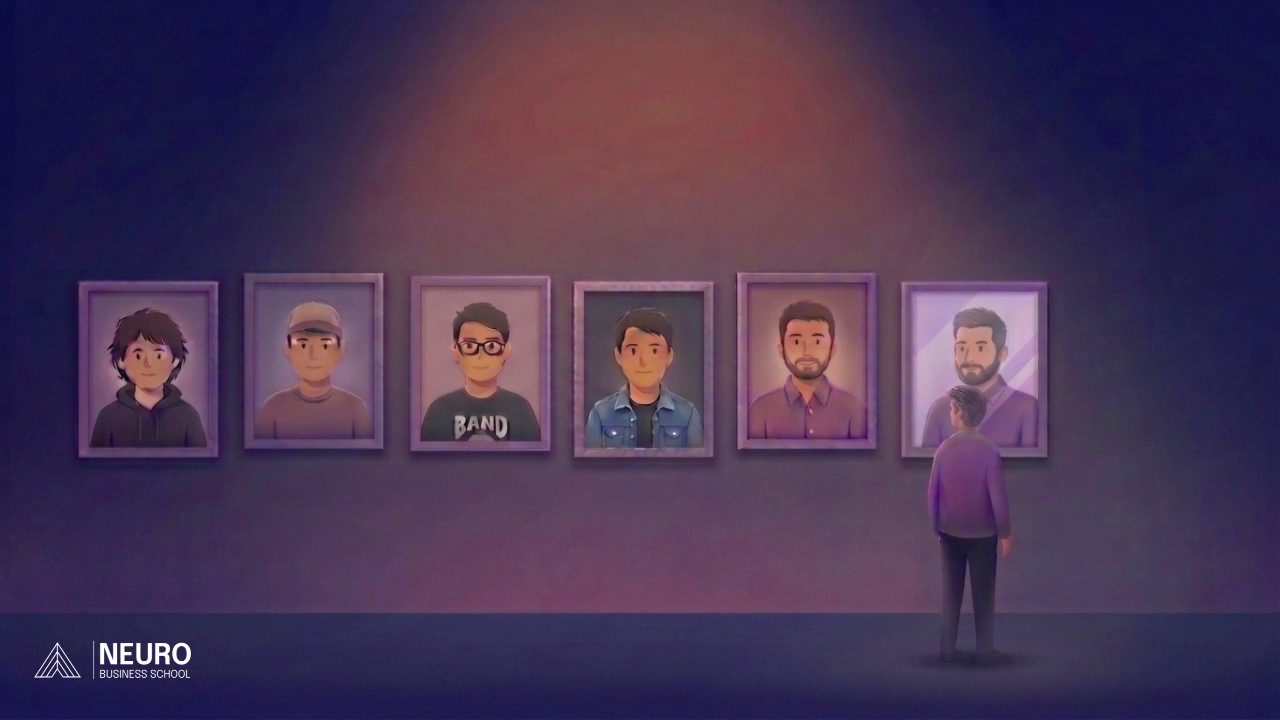

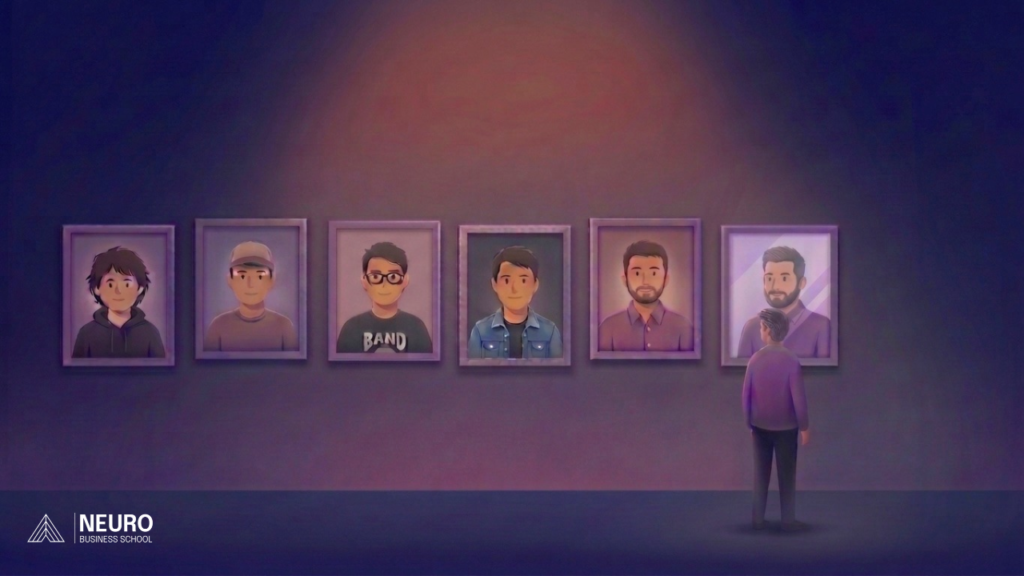
Think back ten years: your job, the music you listened to, the people you spent your weekends with. Now picture yourself ten years from now. For most people, the first picture is full of change and the second looks a lot like today. Psychologists have a name for that gap, and it helps explain why so many people quietly decide that a career change is something for other people, or for a younger version of themselves.
What this article covers:
- Why your brain assumes you’re done changing
- What decades of research say about personality after 30
- What happened to London taxi drivers who spent years learning
- Why so many professionals are going back to school
- How a career change actually happens in real life
Why Do We Think We’re Done Changing?

Photo by fish socks on Pexels
We tend to believe we’ve already become our final selves, even though we can see how much we changed in the past. Researchers call this the end of history illusion.
In a 2013 study published in Science, Jordi Quoidbach, Daniel Gilbert and Timothy Wilson asked more than 19,000 people, aged 18 to 68, how much their personality, values and preferences had changed over the last ten years, and how much they expected them to change over the next ten. At every age, people reported a lot of change behind them and expected much less ahead.
One part of the study shows how this plays out in everyday choices. People said they would pay an average of $129 to see their current favorite band ten years from now, while people asked about their favorite band from ten years ago would pay only $80 to see them today.
Like many findings in behavioral science, this one is debated, and later research suggests it applies to some people more than others. So the more useful question is what happens when researchers measure real change over time.
Do People Really Keep Changing After 30?
Yes. Studies that follow the same people for years show that personality keeps developing well into adulthood, with some of the biggest shifts happening between 20 and 40.
A 2006 analysis in Psychological Bulletin by Brent Roberts, Kate Walton and Wolfgang Viechtbauer combined 92 samples from long-term studies. Conscientiousness, emotional stability and confidence in social situations all increased over time, especially between 20 and 40, and most of the trait groups they looked at kept changing in middle and older age too.
For anyone weighing a career shift, that matters: the person making the decision at 32 or 38 isn’t a finished product.
Can an Adult Brain Still Learn Something Big?

Photo by Tima Miroshnichenko on Pexels
It can, and in some cases the changes show up on brain scans.
To pass an exam called “the Knowledge,” London taxi drivers have to learn the layout of about 25,000 streets, which usually takes three to four years. Katherine Woollett and Eleanor Maguire scanned 79 trainees at the start of their training and again years later. Only the trainees who went on to qualify showed an increase in gray matter in the posterior hippocampus, a part of the brain involved in spatial memory. Those who failed, and a control group, showed no such change.
A study of medical students preparing for a major exam found a similar pattern, with gray matter increasing in brain regions linked to memory during months of intense study.
These studies are about specific, sustained learning, not a promise that any course will rewire you. What they do show is that the adult brain keeps responding to serious effort.
Why Are So Many People Going Back to School?

Because work is changing faster than most first degrees can keep up with.
The World Economic Forum’s Future of Jobs Report 2025 found that employers expect 39% of workers’ core skills to change by 2030. That shift is already showing in who goes back to study. In the US, official figures from the National Center for Education Statistics show that most part-time graduate students are 30 or older: 59% at public universities and 63% at private non-profit ones.
Going back to school later in a career is no longer the exception, and for many professionals a postgraduate degree has become a practical way to stay ready for what comes next.
If the change you’re noticing in your own work is about AI, the Master in Artificial Intelligence for Business is designed for professionals who want to understand and lead with AI rather than build it, with no coding required.
Your first degree trained you for one version of the world. That world has already changed.
How Does a Career Change Actually Happen?
Usually by doing, not by planning everything first.
Herminia Ibarra, a professor of organizational behavior at London Business School, studied how professionals reinvent their careers for her book Working Identity. Her main argument is that most people get the order wrong: they wait to know exactly who they want to become before they act, when clarity usually comes from acting first. Reinvention tends to come from three things working together:
Trying new kinds of work, often in small ways at first
Spending time with new people and networks
Retelling your own story so the next step makes sense
That’s why a career switch rarely happens overnight. It often starts as something small, a new project or a subject you can’t stop reading about. If that sounds familiar, our article on the signs you’re ready for a career change explains where that curiosity usually leads.
Is Staying the Same the Riskier Choice?
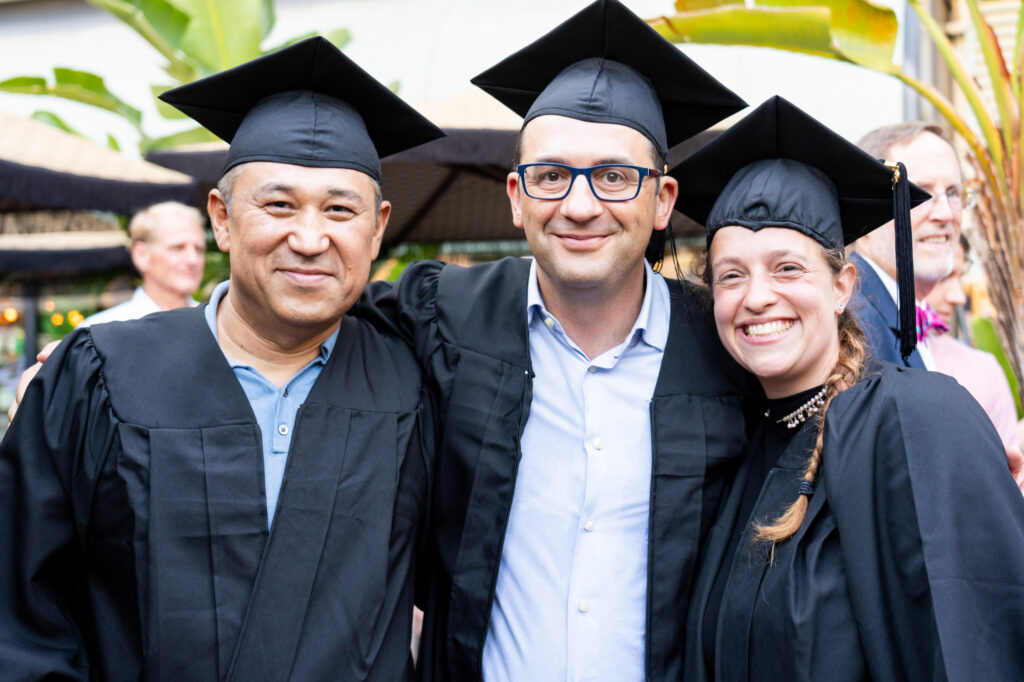
For a lot of people, it might be. Skills are shifting, the adult brain keeps adapting, and personality keeps developing long after we assume it has settled. Going back to study isn’t a sign that something went wrong. More often, it’s a sign that someone noticed the world moving and decided to move with it.
If a voice in your head keeps asking who you are to start over, our article on imposter syndrome explains why even very capable people feel this way. And if you’re ready to build the strategic and leadership skills for your next chapter while you keep working, the online Neuro MBA is built for professionals at exactly this point in their careers.
FAQ
Do I need to quit my job to go back to school?
No. The Neuro MBA is taught online, and the Master in AI for Business is available online, hybrid or on campus in Barcelona, so you can choose the format that fits around your work.
Do I need a business background to make a career change?
No. NEURO Business School students come from many backgrounds, including government, hospitality, journalism, and clinical psychology, alongside more traditional business paths. If you’re not sure where to start, book a free consultation and talk it through.
Sources
1. Science, Jordi Quoidbach, Daniel T. Gilbert, Timothy D. Wilson, “The End of History Illusion”
2. Journal of Research in Personality, Michael A. Busseri, Hannah Harris, “Life Satisfaction and the ‘End of History Illusion’: A Reply to Quoidbach, Gilbert, and Wilson”
3. Psychological Bulletin, Brent W. Roberts, Kate E. Walton, Wolfgang Viechtbauer, “Patterns of Mean-Level Change in Personality Traits Across the Life Course: A Meta-Analysis of Longitudinal Studies”
4. Current Biology, Katherine Woollett, Eleanor A. Maguire, “Acquiring ‘the Knowledge’ of London’s Layout Drives Structural Brain Changes”
5. Journal of Neuroscience, Bogdan Draganski et al., “Temporal and Spatial Dynamics of Brain Structure Changes during Extensive Learning”
6. World Economic Forum, “The Future of Jobs Report 2025”
7. National Center for Education Statistics, “Characteristics of Postsecondary Students”
8. Harvard Business Review Press, Herminia Ibarra, “Working Identity: Unconventional Strategies for Reinventing Your Career”