

The acceptance email lands, and then, for a while, nothing happens. If you’ve just been accepted into a business degree program, you’re probably somewhere in that gap between saying yes and your first class, weeks or months where the excitement hasn’t worn off but the program still feels far away. A better use of that time: three books that change how you notice decisions being made, your own and everyone else’s, long before day one. None of them are required reading. Read even one, and you’ll walk into your first class already thinking differently.
What Is Thinking, Fast and Slow About?
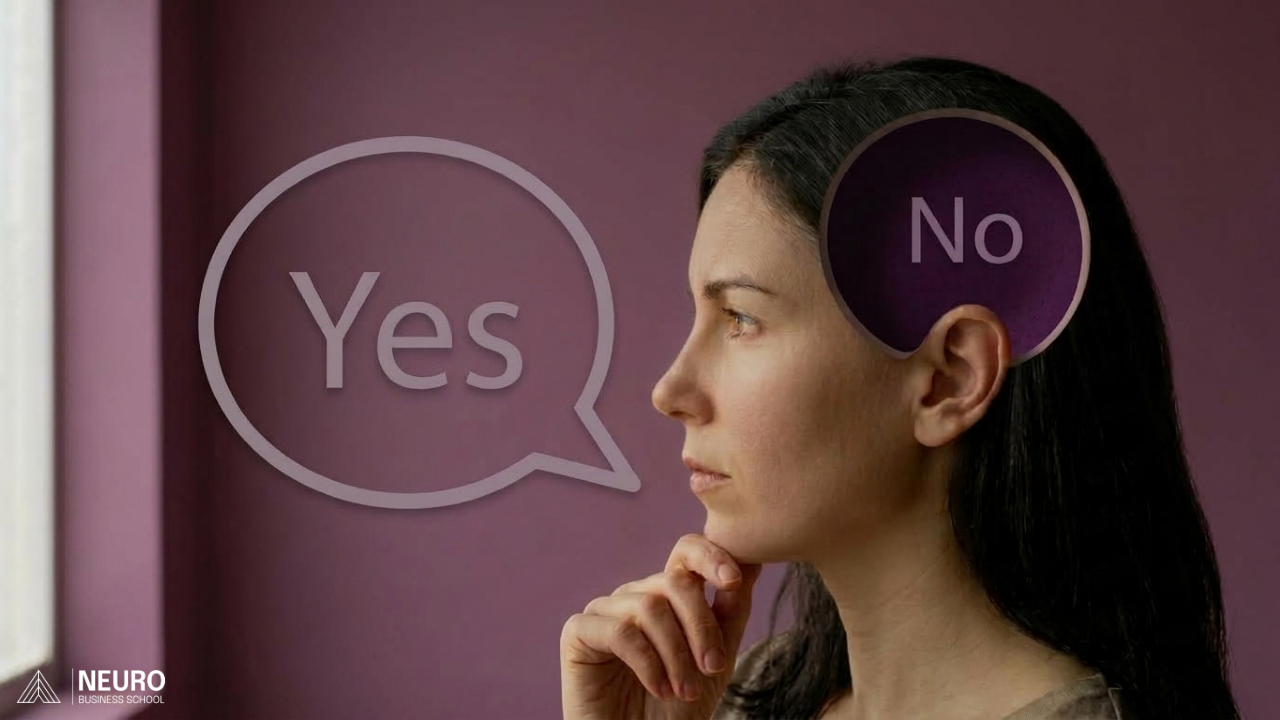
Thinking, Fast and Slow, by Daniel Kahneman, is about the two systems running your decisions: System 1, the fast, automatic, emotional part of your brain, and System 2, the slow, deliberate part that mostly just approves what System 1 already picked. It’s a useful reset before a business degree, where nearly every framework you’ll learn, negotiation tactics, pricing psychology, leadership decisions, assumes you understand that people, including you, are not the purely rational actors classical economics likes to pretend they are. Kahneman won the Nobel Prize for this work, built on decades spent mapping the shortcuts your brain takes to avoid the effort of actually thinking something through.
Read It Critically
Some of the book’s flashier claims didn’t hold up. A handful of the “priming” studies Kahneman cited, the ones about how subtle cues quietly steer behavior, failed to replicate when other researchers tried to reproduce them years later, and Kahneman said as much publicly, acknowledging he’d placed more faith in the original findings than the evidence deserved. The core framework, System 1 and System 2, along with better-tested ideas like loss aversion and anchoring, has held up far better. Read the big idea as solid. Read the individual anecdotes with a raised eyebrow.
What Is Influence About?
Influence, by Robert Cialdini, is about the handful of psychological triggers, reciprocity, scarcity, social proof, authority, liking, and commitment, that get people to say yes before they’ve actually weighed the decision. It’s close to essential reading before a business degree: marketing, sales, negotiation, and leadership courses all lean on these same principles, whether or not the professor names them explicitly. Cialdini spent years studying salespeople, fundraisers, and marketers from the inside to work out which tactics reliably worked, then built a framework explaining why.
Read It Critically
The book is, functionally, a persuasion playbook, and it’s worth reading as one in both directions. Once you know what scarcity framing or social proof looks like from the outside, you’ll notice it constantly, in class discussions, in case studies, in the marketing you scroll past every day. The useful skill isn’t just learning to use these triggers. It’s noticing when someone’s using them on you.
What Is Nudge About?
Nudge, by Richard Thaler and Cass Sunstein, is about how the way a choice gets presented changes what people pick, even when none of the actual options change. That idea, choice architecture, shows up constantly in a business degree: product design, HR policy, pricing pages, anywhere someone decides how options get laid out for someone else to choose from. It means rearranging a menu, a default setting, or an order form to make one option easier to choose, without removing any other option or changing the underlying incentives. Thaler won the 2017 Nobel Prize in Economics largely for this line of research.
Read It Critically
The book raises a question it doesn’t fully settle: where does a nudge stop being helpful guidance and start being quiet manipulation? Thaler and Sunstein propose some guardrails, nudges should be transparent, reversible, and in the person’s own interest, but the line still depends heavily on judgment. Worth sitting with that tension, especially if you’re about to spend two years learning how to shape other people’s decisions for a living.
Reading a behavioral science book and trusting it are two different skills.
This article asks you to practice both.
So How Should You Actually Use These Books Before You Start?
None of these books are meant to be read once and shelved. Pick one, read it with a pen in hand, and argue with it in the margins: where does this match what you’ve actually experienced, and where does it feel too neat? That habit, treating even well-established ideas as claims to test rather than facts to accept, is closer to what a business degree actually asks of you than memorizing any single framework. The Executive Neuro MBA is built around exactly that kind of thinking: decision-making, persuasion, and behavioral science applied to real leadership situations, not just theory. If Kahneman’s public correction (4) is any indication, the researchers behind these ideas expect the same scrutiny from you that they eventually applied to themselves.
FAQ:
Do I need to read these before my program starts?
No, they’re not required reading, but starting even one shifts how you approach case studies and class discussions from day one.
How long does it take to read all three books?
Each runs roughly 250–350 pages; reading one a month over the summer is a realistic pace without rushing.
What if I’ve already read one of these?
Reread it with the “read it critically” lens from this article. Or, if you want to go deeper into neuromarketing-specific reading, we’ve covered that separately.
Sources:
- Kahneman, D. Thinking, Fast and Slow. Farrar, Straus and Giroux, 2011.
- Cialdini, R. Influence: The Psychology of Persuasion. Harper Business, revised edition, 2021.
- Thaler, R. & Sunstein, C. Nudge: Improving Decisions About Health, Wealth, and Happiness. Yale University Press, revised edition, 2021.
- “I placed too much faith in underpowered studies”: Nobel Prize winner admits mistakes. Retraction Watch, Feb 2017.