
Photo by Andrea Imre on Pexels
Stand on a busy street corner and your brain is already working before you’ve noticed anything. Stand in a park a few minutes later, and it’s working differently again. Neither reaction is in your head. Both are measurable, and researchers have spent over a decade proving it.
What this article covers:
🧠 What a stressful fMRI experiment revealed about city brains vs. country brains
🏙️ Whether that finding is a one-off or a real, repeating pattern
🌳 What the research says green space actually does for the brain
📍 How Barcelona is designed around exactly this science
💼 What this means beyond mental health, for decision-making and focus
What Does Urban Stress Actually Do to the Brain?
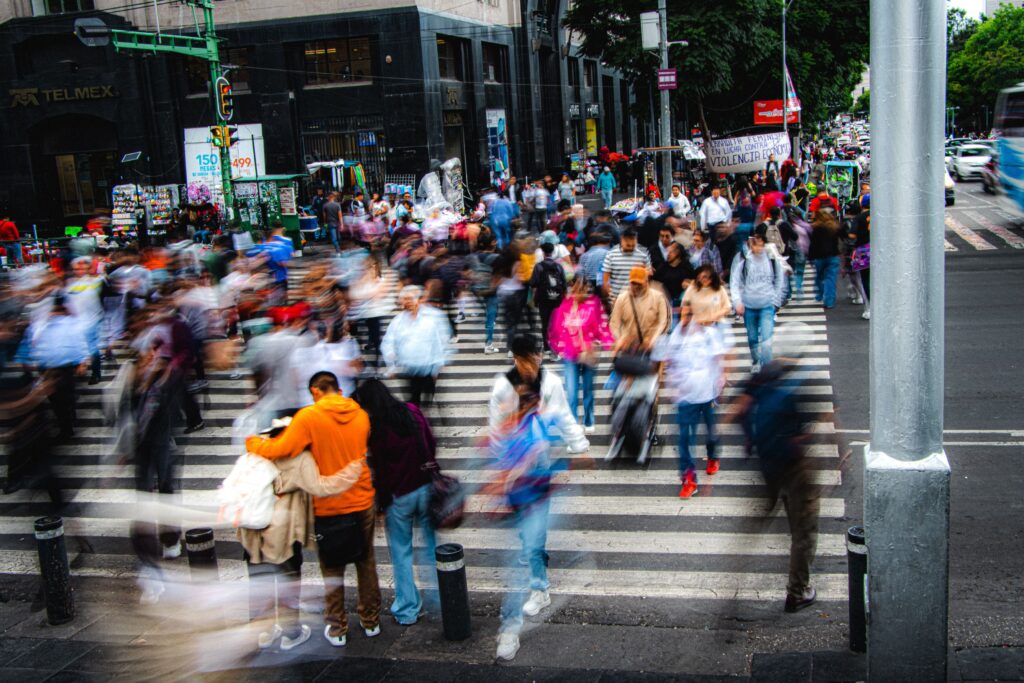
Photo by Pexels User on Pexels.com
In 2011, a team led by Florian Lederbogen ran an experiment that’s since become one of the most cited studies in environmental neuroscience. Volunteers went into an fMRI scanner and did a stressful task: solve arithmetic problems fast, in public, while getting critical feedback. The researchers weren’t testing math skills. They were testing what social stress does to the brain, and whether where someone lives changes the answer.
It did. People currently living in a city showed higher activity in the amygdala, the brain’s alarm system, during the stress task. Almost nobody expects a city street to register as a threat. The brain apparently disagrees.
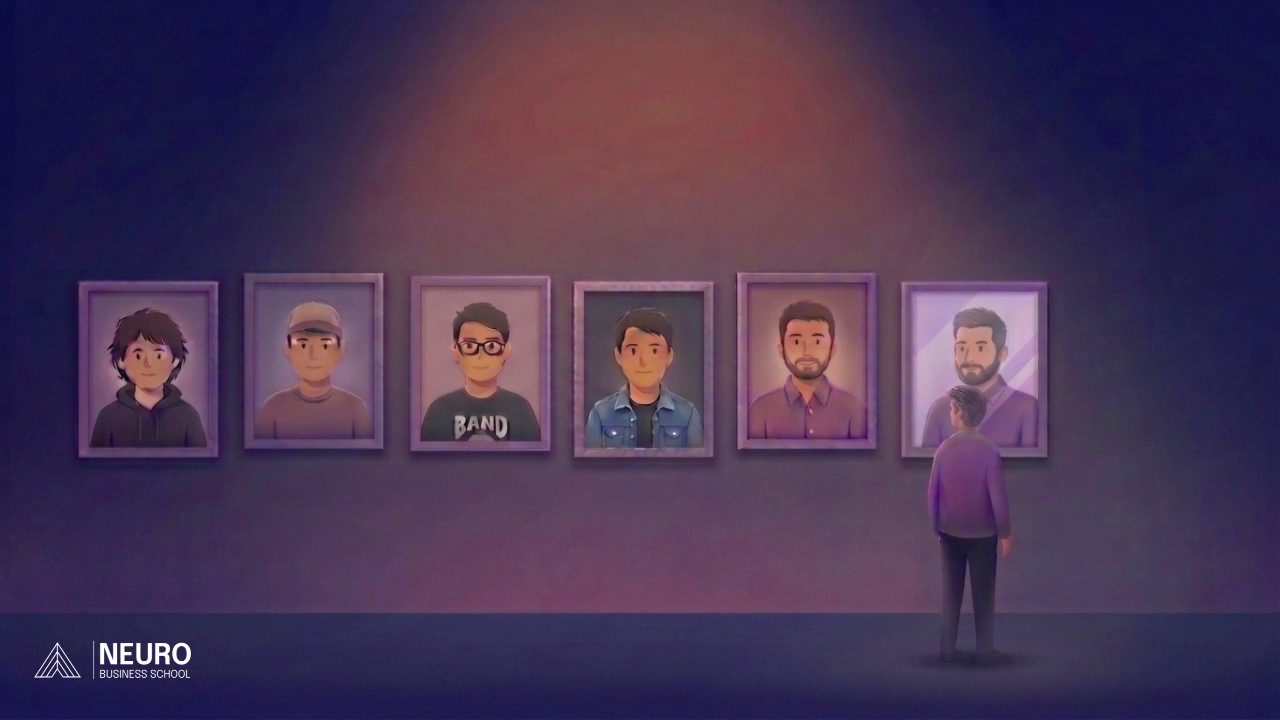
People who had grown up in a city, no matter where they lived now, showed a different response: activity changed in the part of the brain that normally helps calm the amygdala back down. Two different kinds of exposure left two different marks.
The takeaway: current stress and childhood environment aren’t the same thing for the brain, and they don’t fade at the same rate.
Does the Stress Pattern Repeat Across Cities?
One striking study invites an obvious question: does the same thing show up elsewhere? A 2022 review by Ancora and colleagues, published in Frontiers in Psychiatry, pulled together decades of neuroscience research on cities, drawing on fMRI, EEG, and fNIRS studies across 62 papers.
The pattern repeated. Built environments were consistently linked to higher mental strain. Green spaces, parks, gardens, tree-lined corridors, showed measurable restorative effects. This wasn’t one lab agreeing with itself. It was three different imaging techniques, decades apart, pointing at the same conclusion.
Busy streets tax the brain. Green space helps it recover.
That’s not a wellness claim, it’s what shows up across 62 studies.
What Does Green Space Actually Do for the Brain?

Photo by Omar Aboud on Pexels.com
The research above points at something urban planners already half-know: real access to green space changes the equation for the brain. It shows up across dozens of neuroimaging studies, not as a nice-to-have, but as a measurable factor in how stressed a place makes you feel.
That raises the obvious next question: which cities are actually built with this in mind.
Barcelona: Designed to Calm the Nervous System
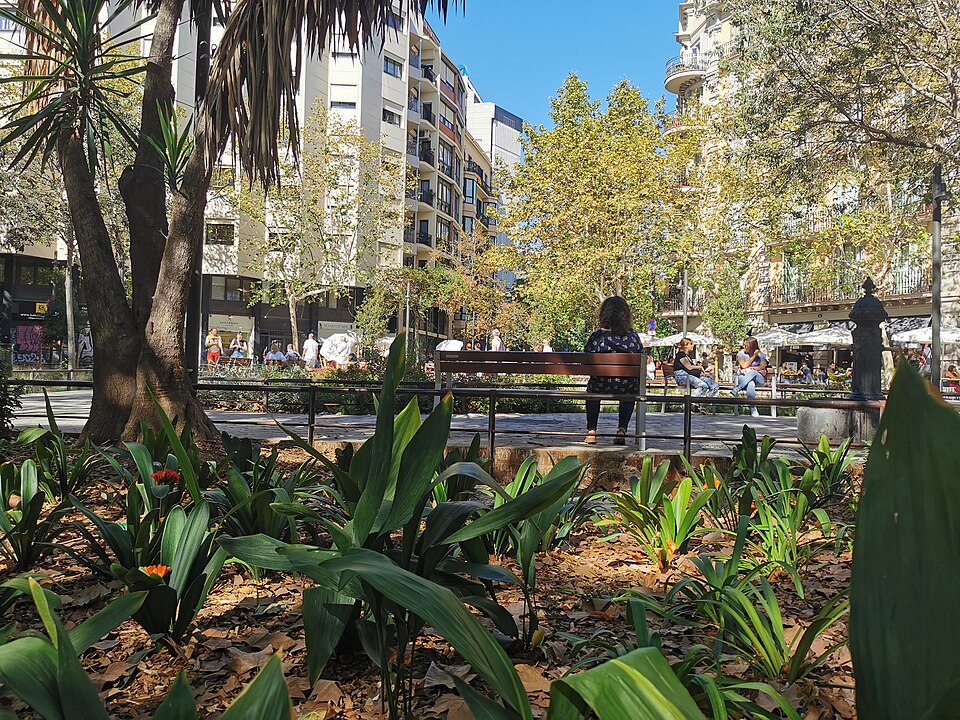
Cataleirxs, CC BY-SA 4.0 via Wikimedia Commons
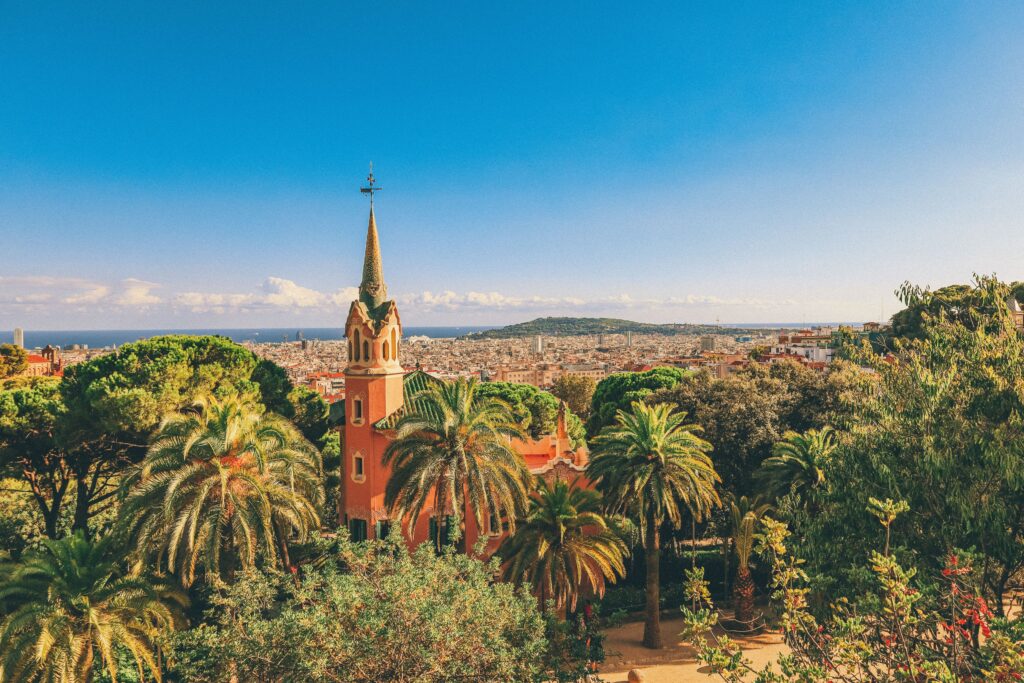
Barcelona isn’t just guessing about any of this. In 2023, researchers at the Barcelona Institute for Global Health (ISGlobal) modeled the mental health impact of the city’s Eixos Verds, or “Green Axes,” plan, which is turning a network of streets in the Eixample district into car-free, tree-lined corridors. Their estimate: once fully in place, the plan could meaningfully reduce mental health disorder cases across more than 30,000 residents.
That’s not a claim about Mediterranean lifestyle. It’s a city government using the same kind of evidence covered above, that green space lowers stress, lifts mood, and eases anxiety, to redesign its own streets.
For anyone studying here, that means the restorative side of the research isn’t theoretical. It’s a short walk from most of the city center, and increasingly, it’s built directly into how the city’s most walkable neighborhoods are designed.
What This Means Beyond Mental Health
How environment shapes the brain is core behavioral science, the same field that explains consumer decisions, workplace focus, and the everyday spaces that shape how people feel without them noticing. It’s covered across NBS’s Bachelor in Neuromarketing, Bachelor in NeuroBusiness, and Master in NeuroMarketing, all taught on campus in a city that doubles as a living example of the subject.
Sources
Lederbogen, F., Kirsch, P., Haddad, L., et al. (2011). City living and urban upbringing affect neural social stress processing in humans. Nature.
Ancora, L. A., Blanco-Mora, D. A., Alves, I., Bonifácio, A., Morgado, P., & Miranda, B. (2022). Cities and neuroscience research: A systematic literature review. Frontiers in Psychiatry.
Vidal Yáñez, D., Pereira Barboza, E., Cirach, M., Daher, C., Nieuwenhuijsen, M., & Mueller, N. (2023). An urban green space intervention with benefits for mental health: A health impact assessment of the Barcelona “Eixos Verds” Plan. Environment International.