
You walk into a café for the first time and know within a few seconds whether you want to stay. You haven’t even looked at the menu. The warm light, the music, the smell of coffee and the heavy cup in someone’s hand have already done most of the deciding.
None of that happens by chance. Brands plan what customers see, hear, smell, touch and taste, and the research behind those choices is more specific than most people expect.
What Is Sensory Neuromarketing?

Photo by Tirachard Kumtanom on Pexels
Sensory neuromarketing is the use of brain science and consumer psychology to design what customers see, hear, smell, touch and taste. Aradhna Krishna, a marketing professor at the University of Michigan, defines sensory marketing as marketing that engages the senses and affects how people perceive, judge and behave.
Her point is that sensory cues often work below conscious awareness. They shape ideas like quality or sophistication without the brand having to say a word.
How Do the 5 Senses Influence Buying Behavior?
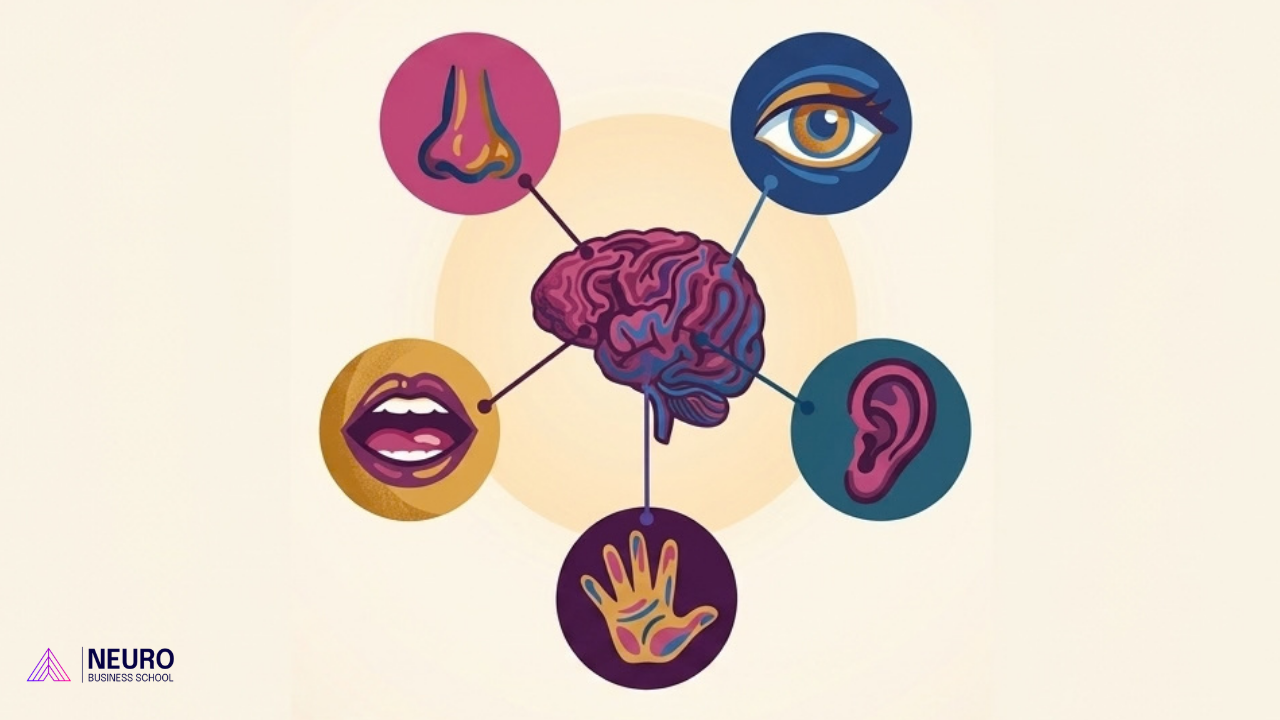
Each sense sends its own signal, but the brain combines them into one impression of a place or product. That means changing one sense can change how the others are experienced, which is the core idea in research on sensory marketing and consumer behavior.
Aradhna Krishna built a whole book around this, Customer Sense: How the 5 Senses Influence Buying Behavior, with a chapter for each sense. The sections below follow the same idea, with one study per sense.
👁️ Sight: Why Does Color Change How You See a Brand?

Color psychology marketing advice is full of bold claims, and many of the statistics you see online can’t be traced back to a real study. The stronger evidence is about meaning.
In four studies, Lauren Labrecque and George Milne found that the hue of a logo shapes the personality people give a brand, with red linked to excitement and blue to competence. Saturation and brightness made those traits stronger. Color also affected purchase intent and how likable and familiar a brand felt.
On a website, the story is a bit different. As we explained in 5 sneaky ways brands use neuromarketing on you, contrast often matters more than the exact color of a button.
🎵 Sound: Can Background Music Change What You Buy?
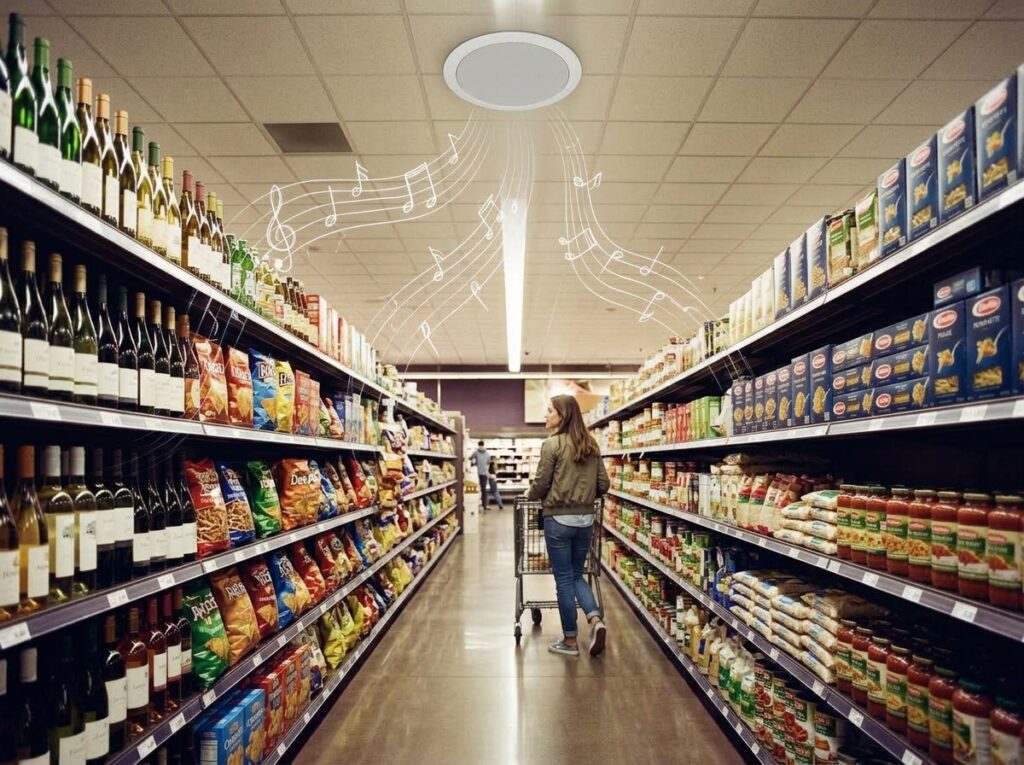
In a UK supermarket, researchers placed French and German wines side by side and played French accordion music or German Bierkeller music on alternate days for two weeks. On French music days, French wine outsold German wine. On German music days, the opposite happened.
When shoppers were asked about it afterwards, very few said the music had played any part in their choice. The music worked by bringing a country to mind, not by telling anyone what to buy.
👃 Smell: Why Do Stores Smell the Way They Do?

Because a pleasant scent can make the whole store seem better. In a study by Eric Spangenberg, Ayn Crowley and Pamela Henderson, a scented store environment led people to rate both the store and its products more positively.
Scent is one of the most studied senses in marketing, and we covered it in depth in Stores That Smell Like Nothing Sell Less.
✋ Touch: Why Do You Want to Pick Things Up Before Buying Them?

Image by magnific.com
Because touching something makes it feel a little more like yours. Joann Peck and Suzanne Shu found that simply touching an object increased people’s sense of ownership, even when it wasn’t theirs. That feeling, together with how pleasant the object felt in the hand, affected how much they valued it.
Their research also found something useful for online shops: asking people to imagine touching a product increased that sense of ownership too.
👅 Taste: Can Sound Change How Food Tastes?

Image by jannoon028 on Magnific
It can. In a study led by Andy Woods at the University of Manchester, blindfolded participants ate snacks while hearing loud noise, quiet noise or nothing at all through headphones. With loud noise, they rated the food as less sweet and less salty, but crunchier.
The researchers also found that the more people liked the background sound, the more they liked the food. Andy Woods was partly inspired by a familiar question: why airline food tastes so bland.
What Happens to the 5 Senses Online?
On a screen, a brand works mostly with sight and sound. Touch is only partly there, through things like the short vibration your phone makes when a payment goes through. Smell and taste disappear completely.
Good user experience design makes up for the missing senses with clear colors, recognizable sounds, smooth movement and photos that help you picture the product in your hands. That last idea fits Peck and Shu’s finding that imagining touch can partly stand in for the real thing.
On a screen, a brand works mostly with two senses.
The best digital experiences make you forget the other three are missing.
How Do Brands Use the Senses Without Overwhelming People?
More stimulation isn’t the answer. What matters is that the senses match. Anna Mattila and Jochen Wirtz tested scent and music together in a real store, using calm and energetic versions of each.
When the scent and the music matched in energy, shoppers rated the store more positively, made more impulse purchases and were more satisfied than when the two clashed. A relaxing scent next to fast, energetic music works against itself.
• • •
Think back to that café. The light, the music, the smell and the cup were all decisions someone made, based on how the brain turns five separate signals into one feeling about a place.
Understanding those decisions, and making them on purpose, is where psychology and marketing meet. It’s also a big part of what the Master in NeuroMarketing at NEURO Business School covers. If you’d rather study in Spanish, the same program is available online as the Máster en Neuromarketing.
Sources
1. Journal of Consumer Psychology, Aradhna Krishna, “An integrative review of sensory marketing: Engaging the senses to affect perception, judgment and behavior” (2012)
2. Palgrave Macmillan, Aradhna Krishna, “Customer Sense: How the 5 Senses Influence Buying Behavior” (2013)
3. Journal of the Academy of Marketing Science, Lauren I. Labrecque and George R. Milne, “Exciting red and competent blue: the importance of color in marketing” (2012)
4. Journal of Applied Psychology, Adrian C. North, David J. Hargreaves and Jennifer McKendrick, “The influence of in-store music on wine selections” (1999)
5. Nature, Adrian C. North, David J. Hargreaves and Jennifer McKendrick, “In-store music affects product choice” (1997)
6. Journal of Marketing, Eric R. Spangenberg, Ayn E. Crowley and Pamela W. Henderson, “Improving the store environment: Do olfactory cues affect evaluations and behaviors?” (1996)
7. Journal of Consumer Research, Joann Peck and Suzanne B. Shu, “The effect of mere touch on perceived ownership” (2009)
8. Food Quality and Preference, A. T. Woods and colleagues, “Effect of background noise on food perception” (2011)
9. Journal of Retailing, Anna S. Mattila and Jochen Wirtz, “Congruency of scent and music as a driver of in-store evaluations and behavior” (2001)