

Ask an AI tool a hard question, get an instant answer, and your brain stores less of the answer. Not because you’re lazy, but because remembering is expensive, and your brain skips it when it expects the information to stay reachable elsewhere. Researchers call this the Google effect, documented years before any chatbot existed. Ask AI for an answer instead of working through the problem, and you keep the conclusion but little of the reasoning behind it. That gap is what separates using AI from learning with it.
What Is the Google Effect, and Does It Apply to AI?

Photo by Firmbee.com on Pexels
Your brain remembers less of a fact once it expects to find it again somewhere else. Researchers call this the Google effect, and they documented it years before any AI chatbot existed.
In 2011, Columbia psychologist Betsy Sparrow, together with Jenny Liu and Daniel Wegner, ran four experiments to test it, published in Science journal. In one experiment, participants typed trivia statements into a computer. Half were told the statements would be saved; half were told they’d be erased. People who expected the information to be saved recalled significantly less of it afterward, and were far better at remembering which folder they’d saved it in than what the statement actually said.
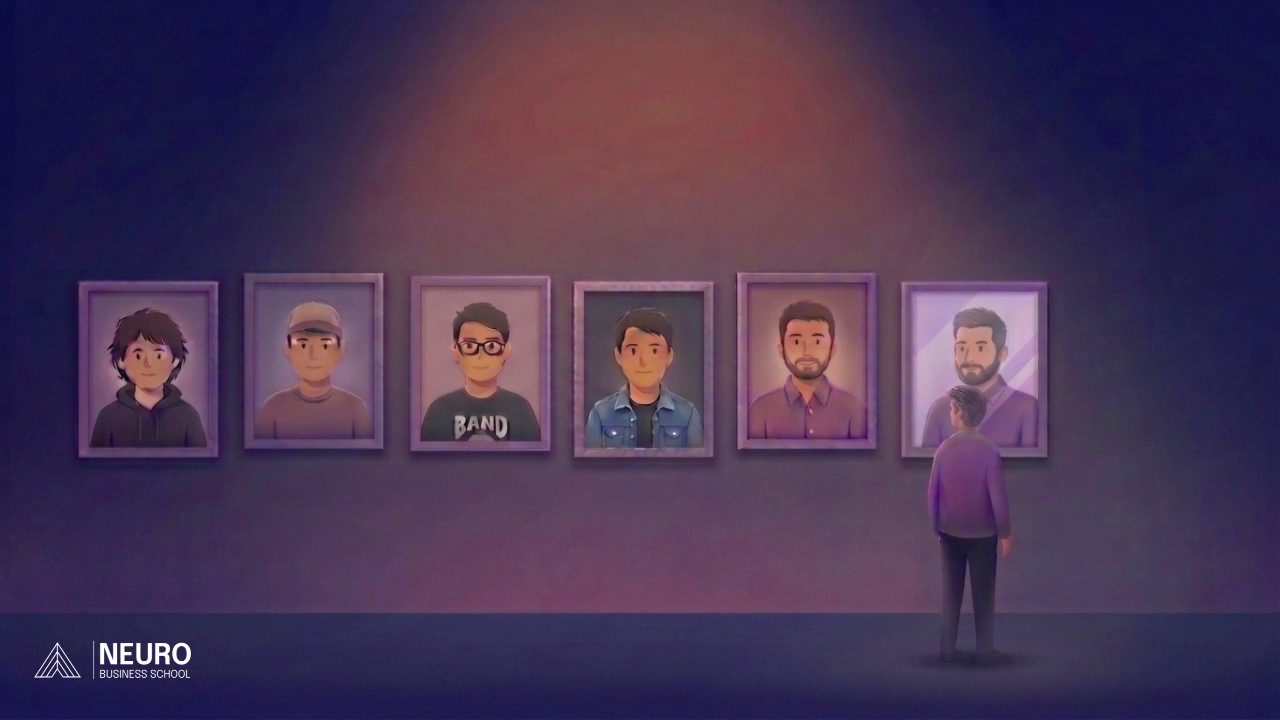
Wegner had a term for this going back to 1985: transactive memory, the way people hand off information to other people, and now to devices, remembering the location of a fact instead of the fact itself. Psychologists still call the pattern offloading. A couple who splits which of them remembers birthdays and which remembers directions is already doing it. The internet became the largest transactive memory system most people have ever used. AI is simply the newest, fastest layer of it.
This isn’t a new problem. Only the trigger is new.
What Happens in Your Brain When AI Does the Thinking?

Photo by Mindfield Biosystems Ltd. on Pexels
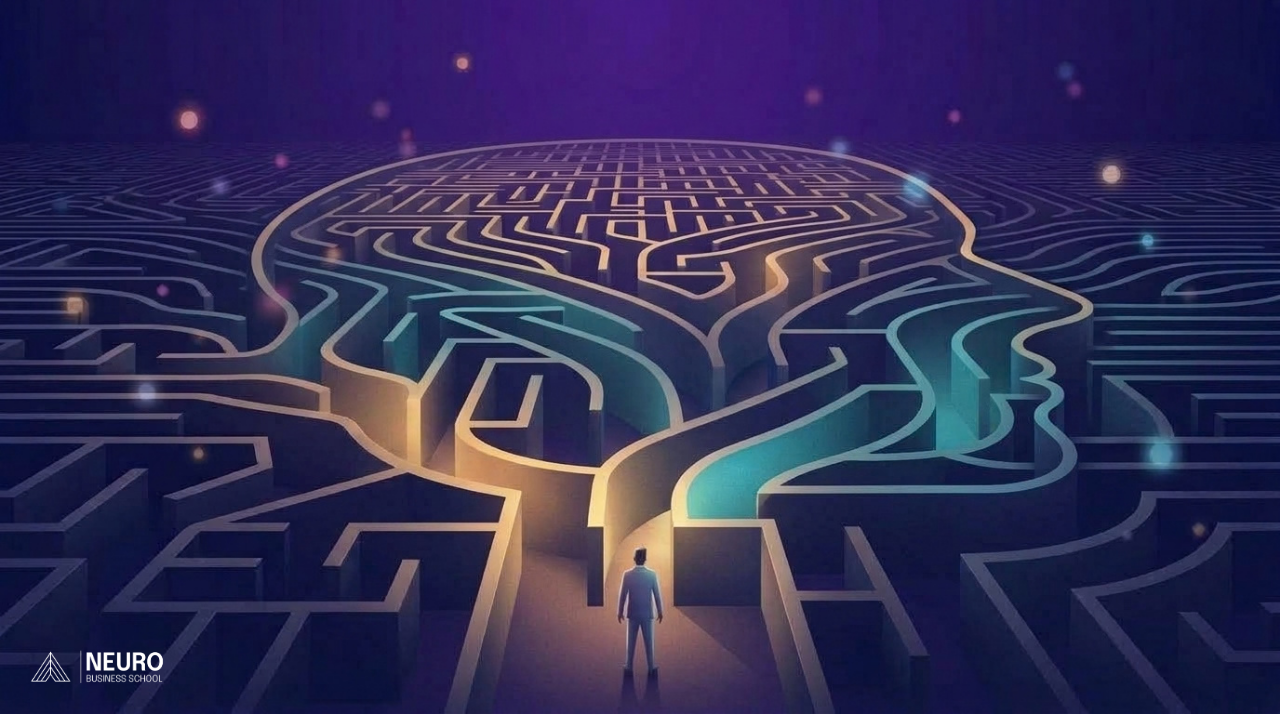
Less. Measurably less, according to a 2025 study out of MIT’s Media Lab that tracked brain activity while people wrote with AI.
In “Your Brain on ChatGPT”, 54 participants wrote SAT-style essays across several sessions: one group used ChatGPT, one used a search engine, and one used no tools at all, while wearing EEG headsets that measured brain connectivity throughout.
The brain-only group showed the strongest, most widespread neural connectivity of the three groups, in networks tied to memory, attention, and executive control. The ChatGPT group showed the weakest. When asked afterward to recall or discuss what they had just written, the ChatGPT group struggled noticeably more than the other two. The researchers called the pattern cognitive debt: the tool does the synthesizing, and the brain, measurably, does less.
Is It Bad to Let AI Think For You?
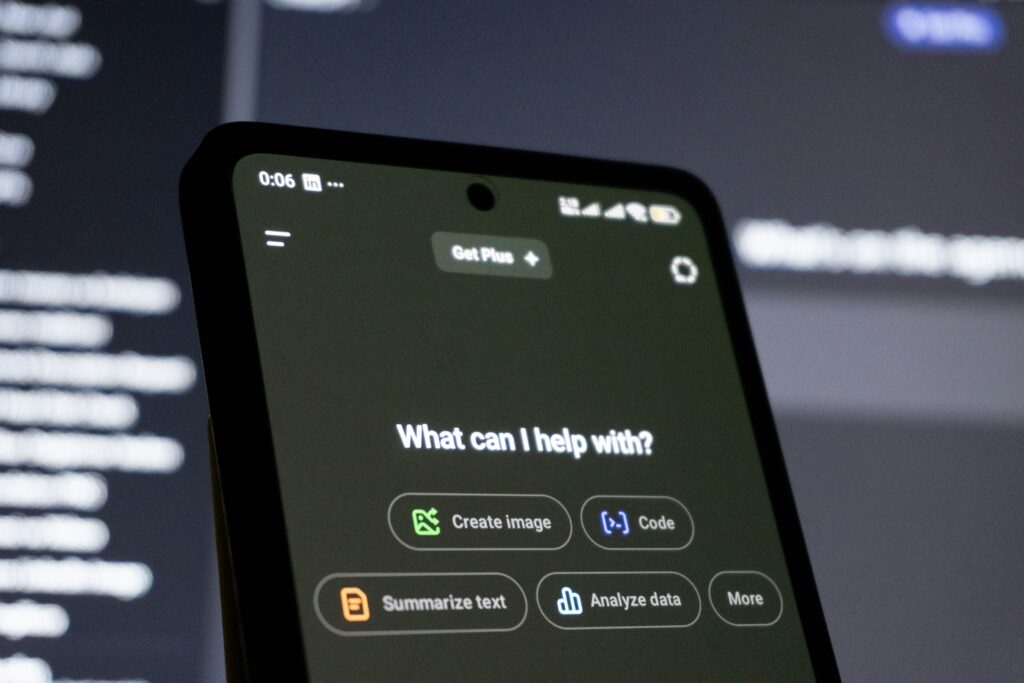
Photo by Zulfugar Karimov on Unsplash
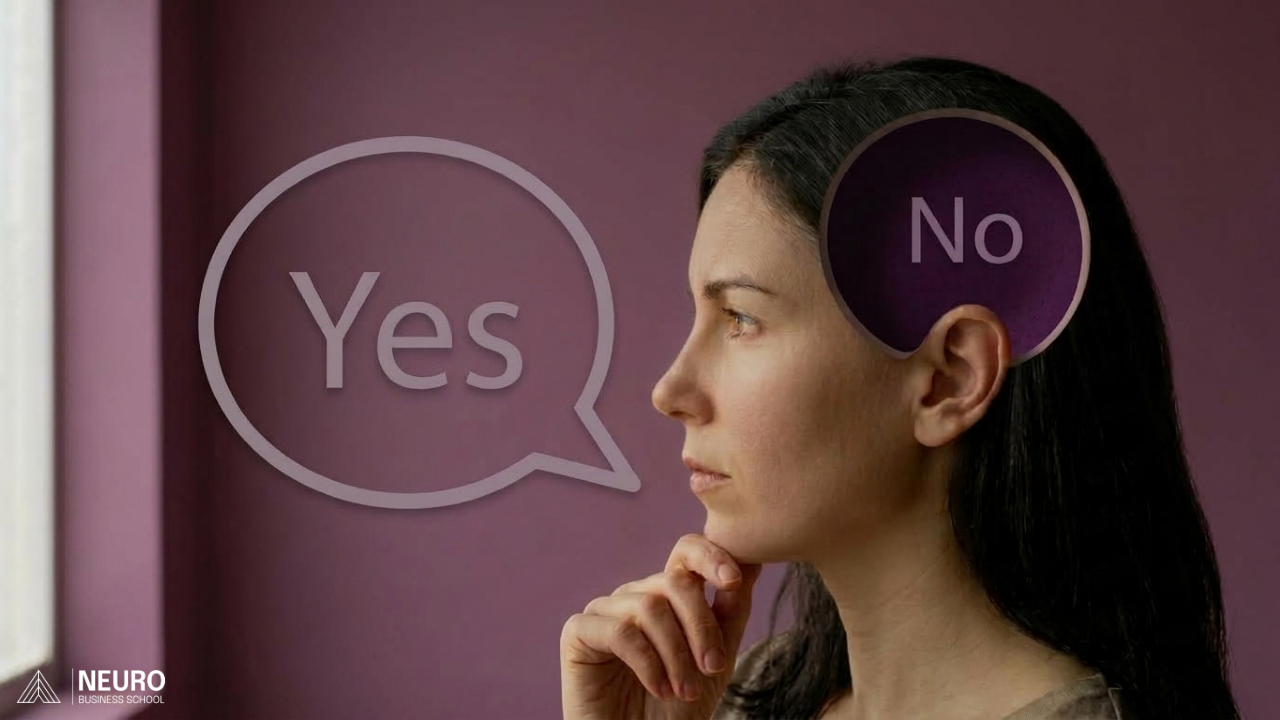
Not inherently, and this is where the story gets more useful than alarming. Handing off a phone number to your contacts list isn’t making you dumber. It’s freeing up working memory for something that actually needs it. The brain has finite resources, and handing off low-value recall to a tool is, most of the time, the efficient move.
The problem shows up somewhere more specific: when the thing being handed off is the actual skill you’re supposed to be building, not just a fact you’d look up anyway. Letting AI remember your meeting time costs you nothing. Letting AI do all your reasoning through a subject you’re meant to be learning costs you the subject.
Think of it as a question of what kind of memory you’re building. A phone number handed off to your contacts is a static fact, it doesn’t need to live in your head to be useful later. A skill, a method, a way of reasoning through a problem, is different. That has to be rebuilt inside your own head at least once before handing it off does you any good, otherwise there’s nothing there to hand off in the first place.
The brain doesn’t skip remembering because it’s lazy. It skips remembering because it’s efficient, and it expects you to look it up again.
Does the Order You Use AI In Change What You Remember?
Yes, and the difference is significant. Participants who struggled with a problem first, then checked their work against AI, remembered far more than participants who reversed the order.
That comes from a fourth session in the MIT study. Participants who had written unaided first, then switched to using ChatGPT, showed stronger recall and broader brain engagement than participants who started with ChatGPT and only later worked unaided. Struggle with the problem first, and the data suggests you keep more of it. Get the answer handed to you first, and only reason through it afterward, and the same tool produces a weaker result.
Almost nobody does this in practice. Most people reach for AI before attempting the problem, not after, which is the reverse of what the research suggests works best.
How Do You Study AI Without Losing the Learning?

Photo by MART PRODUCTION on Pexels
None of this means avoiding AI. It means studying it, and studying with it, in an order that keeps your brain in the loop instead of routing around it entirely.
Try the problem before you ask. Even a rough, wrong attempt gives your brain something to compare the AI’s answer against, closer to how the brain-only group in the MIT study engaged with the material. Ask AI to explain its reasoning, not just deliver its conclusion, then explain it back in your own words without looking at the screen. If you can’t, you don’t understand it yet. You’ve just borrowed it.
This applies just as much to studying AI itself as it does to using it for something else. Reading about a machine learning concept and then asking AI to summarize it is not the same as being able to explain that concept, unprompted, to a colleague. The second one is the version that actually holds up in a job interview, a client meeting, or a strategy session where no chatbot is in the room.
Understanding how AI is actually changing the mechanics of attention, memory, and decision making, not just how to prompt it, is core territory in the Master in AI for Business at Neuro Business School, built to fit around a career you’re not stepping away from, available fully online.
A Final Thought
The Google effect isn’t a flaw in human memory. It’s a feature, one that’s been quietly deciding what’s worth remembering since long before anyone typed a question into a search bar. AI hasn’t broken that system. It’s just given it a new, much faster place to hand things off.
The difference between a shortcut and a crutch isn’t the tool, it’s the sequence: think first, check second, or skip straight to the answer and call it learning. One builds a second memory you can actually rely on. The other quietly borrows a memory you never had in the first place.
Explore the Master in Artificial Intelligence for Business at Neuro Business School, or read more on how the brain handles information and reward in a related post on the NBS Blog.
FAQ:
Does using AI make your memory worse?
Not exactly. Your brain remembers less of a specific fact once it expects to find it again through AI, the same pattern it shows with any tool it trusts to hold onto information. That’s a shift in what gets remembered, not a decline in memory itself.
What is the Google effect?
The Google effect is the tendency to remember where to find information rather than the information itself, once you expect that information to stay accessible. Psychologists Betsy Sparrow, Jenny Liu, and Daniel Wegner first documented it in 2011.
Is it bad to let AI think for you?
It depends on what you’re handing off. Letting AI remember a fact you’d never need to recall costs you nothing. Letting it do all the reasoning through something you’re supposed to be learning costs you the skill itself.
How can you study AI without relying on it too much?
Attempt the problem first, then use AI to check or extend your thinking rather than replace it. Explaining a concept back in your own words, without looking at the screen, is the fastest way to tell whether you actually understand it.
Sources
1. Science; Betsy Sparrow, Jenny Liu, and Daniel M. Wegner, “Google Effects on Memory: Cognitive Consequences of Having Information at Our Fingertips”
2. MIT Media Lab; Nataliya Kosmyna, Eugene Hauptmann, Ye Tong Yuan, Jessica Situ, Xian-Hao Liao, Ashly Vivian Beresnitzky, Iris Braunstein, and Pattie Maes, “Your Brain on ChatGPT: Accumulation of Cognitive Debt when Using an AI Assistant for Essay Writing Task”